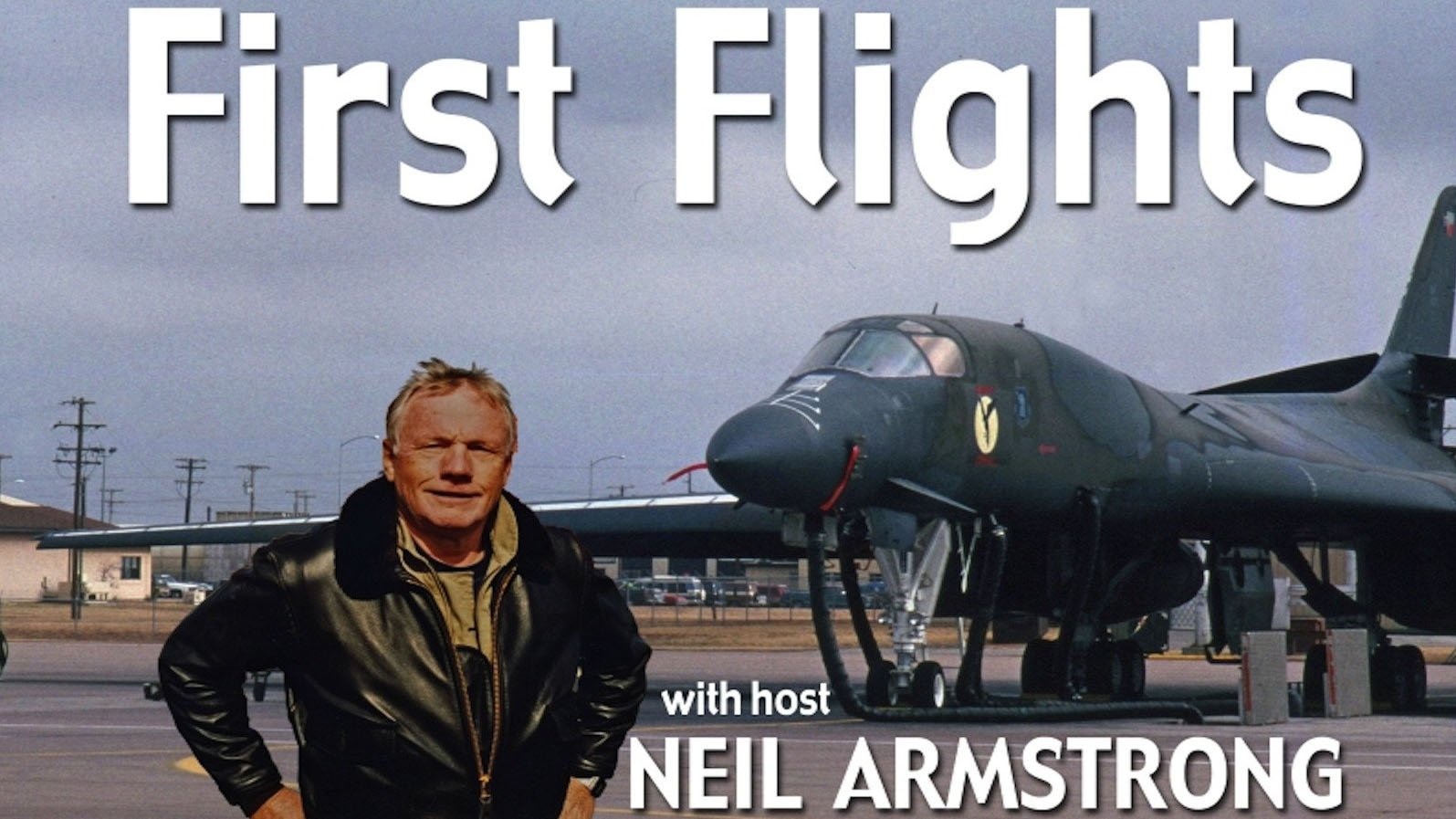
First Flights with Neil Armstrong (1991)
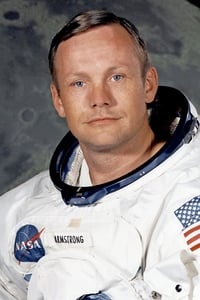
NASA Apollo astronaut Neil Armstrong adds to his long list of space flight & aviation accomplishments as he takes the controls of a variety of flying machines. Each episode blends historic footage, interviews, and flying. Armstrong takes you on an exhilarating adventure through time.
📺 Seasons & Episodes
Season 113 episodes
1. By the Seat of Their Pants
⏱ —Using Lilienthal's glider research, the Wright brothers achieved controlled flight. The French reacted with renewed effort and Bleriot crossed the English Channel. Each airplane had its own personality and a pilot flew by his wits, instinct and luck.
2. Every Day a Better Design
⏱ —Aviators separated into two groups: the airplane designer/builders and those who tried to master the art of flying. While French pilot Pegoud thrilled crowds by performing aerial loops, new airplanes pushed the bounds of speed and distance.
3. Flying Aces, War in the Air
⏱ —WW1 gave the airplane a job, soon the battlefields were full of unarmed aircraft, peering down at the trenches, then carrying news of an impending attack. With a machine gun mounted on the cowling of a Morane-Saulnier Bullet, the fighter plane was born.
4. Flying Entrepreneurs
⏱ —After the war, seasoned pilots who had once dueled with an enemy over the trenches, now performed aerobatics for spectators. Aviators as barnstormers quickly became an endearing folk hero; and also businessman carrying mail and passengers.
5. Flying the Mail
⏱ —Airmail pioneers demonstrated that airplanes had a bright commercial future. The variety of aircraft was dazzling -- anything with wings was put to use. But conditions were harsh and pilots had to be hardy and brave to risk flying the mail.
6. Backyard Fliers: An Airplane in Every Garage
⏱ —In the 1920s when just about anyone could afford a car, interest grew in a safe, inexpensive airplane that anyone could fly. Convenience went a step further in roadable aircraft -- vehicles that could travel the highways, then convert to an airplane.
7. First in Speed: Air Racing
⏱ —From the early years of flight until the late 1930s, air racing was the single most important testing ground for engineering advancements. It provided a breathtaking combination of daredevil risk taking and technological innovation..
8. Bigger is Better
⏱ —During the 1920's and 30's, designers believed that bigger is better. Airline companies were formed, requiring larger, more comfortable airplanes. With the limitations of early airfields for large planes, the flying boat became the queen of the sky.
9. Fighters Between the Wars
⏱ —Nazi Germany and Imperial Japan redefined the arts of aerial warfare with their revolutionary aircraft designs. As the storm clouds gathered for the Second World War, the rest of the world slowly began to rise to the challenge.
10. Testing Under Fire
⏱ —The first German WW2 air attacks destroyed most old biplane fighters. The Allies responded with new monoplane designs. Britain with the Hurricane and Spitfire. The US mobilized designers and builders and produced an incredible range of aircraft.
11. New Generation of Flyers
⏱ —American industry entered the competition to create the world's best fighter -- one that was faster and carried more armament. A dramatic increase in horsepower produced the P-47 Thunderbolt, often claimed to be the fastest fighter of the war.
12. Air Battles At Sea
⏱ —Light, maneuverable and capable of flying long distances, the Japanese Zero was the ideal air weapon for the island hopping Pacific war. While the Japanese built fleets of light, replaceable aircraft, the Americans opted for large, high-powered war birds.
13. Flash of Glory: Aerial Combat Enters the Jet Age
⏱ —During WWII, the Messerschmitt 262, and the Gloster Meteor were introduced. With these first operational jet fighters, a new era in aerial combat had begun. As jet met jet over Korea, the MiG-15 proved Russia to be a a major power in jet development.
Season 213 episodes
1. The Helicopter: From Dreams to Reality
⏱ —In the 1920's, early auto gyros made breakthroughs in rotating wing design, and by the 1930's military interest propelled helicopter development. Advances in controls, and the availability of lightweight turbine engines finally made a practical helicopter.
2. Air Forts Of The War
⏱ —The World War II bombers were capable of delivering an arsenal of destruction. Aerial warfare became a team effort that relied on coordination, accuracy and determination with up to 10 men in an aircraft, and sometimes 1,000 airplanes in a formation.
3. First Jets
⏱ —When jet engines appeared, a whole new set of problems appeared with them. For pilots, the early jets were a nightmare. Trained to fly propeller aircraft, pilots found themselves in need of drastic changes in technique.
4. Airliners: Passengers Join The Jet Age
⏱ —WW2 aviation advances such as hard runways, large long range aircraft and cabin pressurization set the stage for growing passenger transport after the war. Soon jets slashed travel times and brought unheard of growth in mass transportation.
5. The Big Bombers
⏱ —Development of jet engines and the tensions of the Cold War pushed development of long-range bombers that could fly around the world. While designers grappled with structural challenges, pilots struggled with the complexity of flying gigantic machines.
6. Jet Fighters: Wings Of Lightening
⏱ —The U.S. and Russia rivalry developed jet fighters with fantastic speeds and high tech weapons. Computers were unseen co-pilot and some fighters only fired guided missiles. Before long a new generation of highly maneuverable dog-fighting jets was needed.
7. General Aviation: Barnstormers To Businessmen
⏱ —Flying for sport, business, agriculture or photo survey, a fleet of mostly single-engine planes comprises the fastest growing segment of aviation. General aviation is usually not state of the art, but rather clever uses of existing affordable technology.
8. Supersonic Bombers: The Elusive Search
⏱ —In the early 1960's, the U.S. Strategic Air Command wanted high-flying supersonic bombers like the B-58 Hustler and the XB-70. But now the newest bombers are sub-sonic: the low-flying, radar-evading B-1B, and the high tech B-2 Stealth bomber.
9. Locusts Of War
⏱ —The helicopter took on an offensive role for the Vietnam War. Bristling with cannons, rockets and guided missiles, created the gunships. Now the American Apache and Russian Hind are equipped with infrared night vision and lethal anti-tank weapons.
10. Attack Aircraft
⏱ —When a fighter or bomber strikes ground forces, it is acting as an attack aircraft. Many fighters can play this role, but recent wars have shown the value of dedicated attack aircraft, designed to hit hard and survive extensive battle damage.
11. Faster Than The Eye And Higher Than The Sky
⏱ —From the early days of flight, the military looked behind enemy lines with better and better spy planes. After the top secret U-2 was shot down over Russia, Lockheed developed the SR-71. Flying at Mach 3 near the edge of space, it out flew any missile.
12. Experiments In Flight
⏱ —Chuck Yeager's X-1 flight through the "sound barrier" set the stage for the U.S. experimental X-program, a systematic exploration of fresh ideas in aviation. Pilots flew at the cutting edge of technology in untried, untested, and unknown aircraft.
13. Rocket Aircraft
⏱ —In the 1920s, aircraft designers began searching for ways to incorporate the powerful propulsion of rockets into their flying machines. Efforts to harness and control rocket propulsion resulted in many failures but also some dramatic successes.
Season 313 episodes
1. Whirling Wings - Evolution of the Rotorhead
⏱ 25 minFrom Cierva's breakthrough in autogyro design, to the state-of-the-art BK-117, the heart of the helicopter story has been the rotorhead. Early helicopters were complex, dangerous flying machines, prone to failure. For the men and women who took the controls, concentration and daring were essential.
2. Water Birds - Floatplanes and Flying Boats
⏱ 25 minBy the 1930s, flying boats – massive, airborne ocean liners – opened up global routes for passenger service, while the floatplanes entering the Schneider Trophy races were the fastest, most innovative flying machines in existence.
3. Jump to the Sky - Jet VTOL
⏱ 25 minConventional airplanes need large runways for takeoff and landing, a limitation that concerned defense planners. As turbine engines became lighter, a new type of aircraft became possible — one that could take off and land vertically, yet fly with the speed of jets.
4. Tail First Flying - the Canard
⏱ 25 minWhen the small tail surface wings which enable an airplane to go up or down are moved to the front, they are called canards. It is a technology as old as manned flight — the Wrights used canards on their early airplanes. Canards were rarely used after the first World War until computer technology provided the control needed to make the technology feasible.
5. First Around The World
⏱ 25 minMany times in aviation history the ultimate test of aircraft and pilot was to fly around the world. Competition and showmanship always played a part, but in the end it was the mental and physical endurance of the men and women who climbed into the cockpit that made success possible.
6. Flying Blind
⏱ 25 minIn the early days of flying, instrumentation was crude. A weighted silk stocking tied to a strut could help the pilot gauge his airspeed. Wartime challenged pilots to learn the techniques of blind flying. Today, pilots use orbiting satellites to pinpoint their position, and complex autopilots enable an aircraft to fly itself.
7. Flying Wings
⏱ 25 minIn their quest for flight efficiency, some designers thought the ideal shape would be just a wing, nothing else, flying through the air. Though successful development of flying wings has often proved illusive, Northrop's designs proved feasibility, and the B-2 Stealth Bomber brought the configuration into production.
8. Flight Control - Wing Warping to Fly-by-Wire
⏱ 25 minTwo years after the first manned flight, the Wrights mastered control sufficiently to fly the first circle – a major aviation advance that went almost unnoticed. By World War II, the first hydraulically boosted controls were invented, enabling pilots to fly aircraft weighing more than 100,000 pounds without the muscles of a co pilot. Once digital signals succeeded in maneuvering spacecraft, computerized fly-by-wire technology for aircraft was not far behind.
9. Flash Of Glory - Aerial Combat Enters The Jet Age
⏱ 25 minDuring WWII, the Germans introduced the Messerschmitt 262, and the British the Gloster Meteor. With these first operational jet fighters, a new era in aerial combat had begun. As jet met jet in the skies over Korea, the MiG-15 proved Russia to be a major power in jet aircraft development.
10. Flying the Mail
⏱ 25 minAirmail pioneers demonstrated to a public already infatuated with flying, that airplanes had a bright commercial future. They led the way for the great commercial ventures that would one day span the globe. The variety of aircraft was dazzling, but conditions were harsh and pilots had to be hardy and brave to risk flying the mail.
11. Backyard Fliers - An Airplane In Every Garage
⏱ 25 minIn the 1920s when just about anyone could afford a car, interest grew in a safe, inexpensive airplane that anyone could fly. Convenience went a step further in roadable aircraft – vehicles that could travel the highways, then convert to an airplane for the rest of the journey. The airplane has never attained the practicality of the automobile for family travel, but modern aviation offers exciting opportunities for the amateur flyer.
12. First In Speed: Air Racing
⏱ 25 minFrom the early years of flight until the late 1930s, air racing was the single most important testing ground for engineering advancements. It provided a breathtaking combination of daredevil risk taking and technological innovation.
13. Propellers - Wings With A Twist
⏱ 25 minThe Wright brothers realized that a propeller was a rotating wing – giving it a twist made it practical. By the mid 1930s, variable pitch and NACA research revolutionized propeller design. With the coming of the jet age, propellers fell out of favor for large aircraft. But designers soon realized that a fast turboprop with an advanced propeller could be more efficient than the best jetliners.