Data Sources (2023)
Data Sources goes beyond the official version in search of the truth: human rights violations, institutional failures, affairs of state, abuses of power and the criminal exploitation of the planet... ARTE’s digital investigative magazine takes you beyond the headlines.
📺 Seasons & Episodes
Season 16 episodes

1. The Prigozhin Papers
⏱ 26 minAn exclusive investigation into the Russian paramilitary organisation Wagner, headed by oligarch Yevgeny Prigozhin. 2,500 documents were leaked from Prigozhin’s servers by anti-Putin hackers, shedding light on this secretive group of mercenaries, a key element in the war in Ukraine.
2. The Dark Underbelly of European Salmon
⏱ 16 minMore than 80% of the salmon consumed in Europe comes from fish farms. Salmon farming is a speciality of northern countries, with Norway being the main producer. These farms are promoted as a sustainable alternative to wild-caught salmon, but in reality, they are fed with fishmeal and fish oil that require tonnes of other fish species to be caught, depleting the ocean's fish stocks. This overfishing occurs far away from Europe, in Mauritania.

3. The Stolen Children of Ukraine
⏱ 19 minThanks to analysis of videos on Telegram, social media posts, and articles and statements from Russian authorities, this episode of Sources tracks how Ukrainian children were forcibly taken from their parents or orphanages. Taken to Russia under the guise of keeping them safe from the conflict, these children were supposed to be temporarily relocated. But instead they are indoctrinated, given foster families, and even offered for adoption. This action has led to charges against Vladimir Putin and Maria Lvova-Belova, the Russian Commissioner for Children's Rights, by the International Criminal Court.

4. Traffic in Burmese Teak
⏱ 17 minIt is banned in the European Union and yet Burmese teak is still imported. How is that possible? Data Sources goes on the trail of the illegal trade in teak from Myanmar.

5. Danone: Plastic Pollution in Bali
⏱ 17 minIndonesia is the second largest producer of plastic waste in the sea with the situation set to get worse. Environmental protection organisations collect and analyse plastic waste found on beaches, in mangrove forests and in rivers in order to shame the worst polluting companies.

6. China: Pro-Colonisation Influencers
⏱ 14 minThe Xinjiang region in China is the historical homeland of the Uighurs, a persecuted Muslim minority. Open data reveals how Chinese influencers are convincing people from across the country to colonise this province.
Season 26 episodes

1. Paedophilia: The dark side of Instagram
⏱ 17 minA meticulously researched investigation showing how sexual predators operate on Instagram; and how the algorithm could even encourage paedophile activity.

2. TikTok and People Smugglers
⏱ 14 minThis investigation reveals how people smugglers are using social media to encourage migrants to cross the English Channel illegally. In their TikTok videos, smugglers promote their services and compete with untenable promises: "crossing in just 3 hours", "1000% safe crossing", charging between €1,700 and €4,000 per person to take the perilous journey to reach Britain.

3. Ukraine: The Sister and the Murderer
⏱ 15 minFor nine months, Katia Kholodnikova has had no news of her twin brother, Andriy, a Ukrainian soldier who left to fight the Russian invasion in the early days of the war. Until she receives a text message from the enemy camp: "Have you buried your brother? The author claims to be a former Russian soldier and to be the last man to see Katia's brother alive, before killing him.

4. Saudi Arabia: Victims of Neom
⏱ 15 minSaudi Arabian citizens are languishing in prison, and some have even been sentenced to death. Their crime: they resisted expropriation of their homes for the Neom project, the city of the future built on a 170km line in the desert that is Saudi Crown Prince Mohammed Bin Salman’s pet project.

5. Trafficking Baby Gorillas
⏱ 17 minEvery year, more than four hundred baby gorillas disappear from the forests of Central Africa. How is this poaching organised, and for whose benefit? Sources reveals the inner workings of a trade that is both highly lucrative and devastating for the endangered species.
6. Colonisation on the West Bank
⏱ 20 minHow are extremist Israeli settlers taking over land on the West Bank? Data Sources reveals the extent to which illegal outposts contribute to harassing and ultimately driving out the Palestinians from their homes. A strategy supported by the Israeli government.
Season 39 episodes
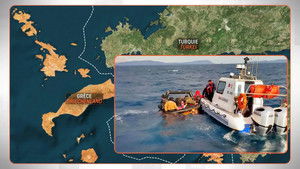
1. Migrant Pushbacks by Greek Coastguards
⏱ 20 minSince 2020, thousands of migrants attempting to reach Europe from Turkey via the Aegean Sea have been pushed back by the Greek coastguard. Data Sources investigates this illegal practice.

2. The Dark Side of Cashmere
⏱ 16 minCashmere is an exquisite fabric, prized for its soft and luxurious feel. But as cashmere jumpers flood the world market, the environmental impacts of increased production are becoming clear. Can it really be sustainable?

3. Homophobia in Africa: American Influence?
⏱ 14 minSince Uganda passed extremely severe laws persecuting gay people, attacks on the LGBT+ community have skyrocketed. But could these new laws be added and abetted by an ultra-conservative American NGO?

4. Russian Embargo: How to Circumvent Sanctions
⏱ 21 minSince the Russian invasion of Ukraine, strict sanctions have been imposed on Russia by Europe and the USA. So how is it that a Russian car dealer manages to import Porches from Germany with impunity? Data Sources investigates how European sanctions are being circumvented, even for products that could directly aid Russia’s military industry.
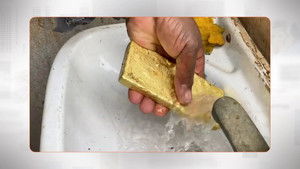
5. Switzerland: Looking for the Missing Gold
⏱ 17 minIn January 2023, a discreet conference was held in Zurich, Switzerland where the company Swiss Gold Treuhand encouraged participants to invest in gold ingots. But today many investors are disappointed: Their money is gone, and the gold has disappeared. Data Sources tries to find out what happened…

6. Fentanyl: China's Double-Dealing
⏱ 17 minFentanyl is a highly addictive drug that is causing tens of thousands of deaths in the USA, the raw materials for which are produced in China. This episode of Data Sources delves into how China uses the threat of Fentanyl in diplomatic dealings with America.

7. Who Are the Social Media Fraudsters?
⏱ 19 minThey sell hacked profiles, provide fake comments and likes and boost fake news. Investigation into the social media fraudsters based in Vietnam.

8. Radicalisation and Video Games
⏱ 23 minMassacres by right-wing extremists and jihadists are faithfully recreated in video games ... From TikTok to Roblox, how does propaganda glorifying extreme violence reach an audience of young gamers online?

9. Saudi Arabia: Influencers and the Regime of Fear
⏱ 20 minOn Instagram and other social media, travel influencers, mostly paid by Saudi Arabia, sing the praises of the nation as an excellent holiday destination. They are part of a communication drive by the Saudis to show off the country as a modern and open country. But behind this carefully curated image is a dark reality: Saudi citizens are imprisoned when they speak their mind.
Season 47 episodes

1. Anabolic Steroids: The Muscle Market
⏱ 17 minAnabolic steroids are freely available online. Influencers encourage their followers to use steroid on Instagram and TikTok and they are easy to order on Telegram. How can a dangerous substance be so easy to get hold of?

2. Facial Recognition: Tech Firms and Surveillance
⏱ 24 minHigh-resolution cameras, facial recognition software, state-of-the-art video surveillance centres: Data Sources reveals how Western companies are helping the authoritarian regime in Kazakhstan to create a mass surveillance system.

3. North Korea: Hunting Down Fugitives
⏱ 18 minCitizens of North Korea trying to flee the country risk their lives. The route through neighbouring China has become a trap as Beijing tracks and deports North Koreans back home with the help of the latest technology.

4. From Plumber to Oligarch: Hungary's Richest Man
⏱ 14 minHow does a small circle close to the government dominate Hungary’s economy? Data Sources investigates the richest man in the country, a childhood friend of Viktor Orban, and how European funds are being used for dubious projects.

5. In the jungle of neobanks: Scams, illegal trading and deceived customers
⏱ 21 minLack of transparency, lax controls, money laundering: Are neobanks encouraging financial fraud and identity abuse? A look at the downside of the banking revolution. Over the last decade, the banking sector has experienced a digital revolution. Apps have replaced branches, chatbots have replaced advisors, and hundreds of new players have flooded the market. But the miraculous transformation of the banking sector also harbors dangers. Data Sources investigated the downside of the banking revolution.

6. A French Company Helps the Russian Army
⏱ 19 minThis is a French group that, in theory, has nothing to do with the defense sector: it specializes in commodities trading and sugar production. In Russia, it has about fifteen facilities and employs 4,000 people.

7. Telegram: the kingdom of cybercriminals
⏱ 20 minStolen and resold in a flash. Identity cards, personal data, banking information... You can find everything on Telegram. An investigation into a booming scam marketplace.