Epic History TV (2015)
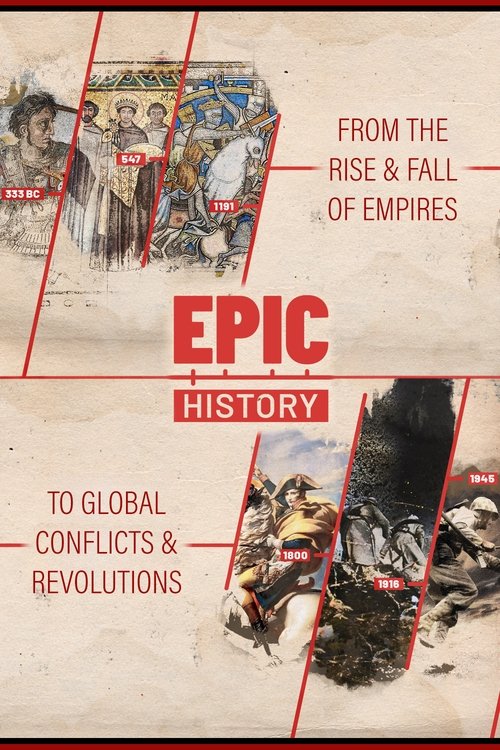
Epic History makes videos about the most dramatic and important stories from our past, from the rise and fall of empires to global conflicts and revolutions. Our team have history degrees and decades of experience in documentary production, and regularly collaborate with specialist historians around the world, so you’re in safe hands as we explore some of the most epic moments in history.
📺 Seasons & Episodes
Specials7 episodes
1. Blackbeard: The True Story (Music Version)
⏱ 6 minThe complete story of the dreaded pirate Edward Thatch, AKA Blackbeard, told in 6 minutes with detailed maps of his voyages and notorious deeds.
2. Epic History TV Trailer #1
⏱ 1 minHere's a preview of what to expect from Epic History TV.
3. Epic History TV Trailer #2
⏱ 1 minHere's a little channel trailer I threw together this week. I hope you like it, and if you do, please share!
4. Epic History TV Channel Trailer 2021
⏱ 1 minI hope you enjoy the new trailer! Please help the channel to grow by sharing far and wide.
5. Epic History Channel Trailer 2024
⏱ 1 minNo description available.
6. Epic History Channel Trailer 2025
⏱ 1 minNo description available.
7. Eagles in the Snow
⏱ 6 min1812 : Everything changes for Napoleon. Forced to abandon Moscow during the Russian winter, the soldiers of the Grande Armée must fight to escape Cossack horsemen. Cold, famine, and savagery — how many will survive?
20153 episodes
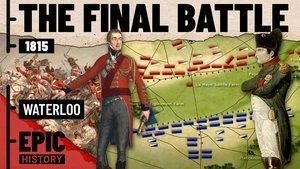
1. Napoleonic Wars: Battle of Waterloo 1815
⏱ 14 minEpic History TV brings you a blow-by-blow account of the entire Waterloo campaign in 14 minutes, with animated maps and artwork, plus rarely seen photographs of survivors of Napoleon's army. In 1815, eight miles south of Brussels, two of history's greatest generals met in battle for the first and only time: Napoleon Bonaparte, Emperor of the French, and the Duke of Wellington. The result was an epic, brutal battle that would decide the fate of Europe.
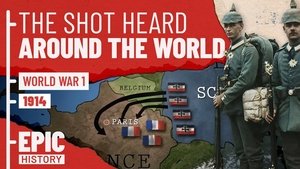
2. World War 1 - 1914
⏱ 12 minHere’s a further trimmed version: *World War One - 1914* explores the alliances of Europe, including the Triple Alliance and Triple Entente, and the assassination of Archduke Franz Ferdinand, which sparked the war. Imperial rivalries and alliances fueled the conflict, though US President Wilson kept America out. Germany invaded France and Belgium but was stopped at the Battle of the Marne, leading to a stalemate of trench warfare. Britain blockaded Germany after winning the first naval battle at Heligoland Bight. In the East, Germany triumphed at Tannenberg and Masurian Lakes, while Austria-Hungary suffered heavy losses. Colonial forces clashed in Africa and the Pacific, with Japan capturing Tsingtao. By winter 1914, failed offensives and high casualties on all fronts crushed hopes of a short war. The first Christmas saw brief peace with football in No Man's Land.

3. History of Russia Part 1: From Tribes to Tsars
⏱ 9 minRussia Part 1 traces the origins of modern Russia and Ukraine among Slavic tribes, Viking raiders, and the medieval kingdom of Kievan Rus. Mongol hordes brought death and destruction, but under the first Tsars, a strong Russian state slowly emerged. Смотреть по русски: • История России. Начало пути Mira este video en Español • Historia De Rusia - Parte 1 A note on 'Ivan the Terrible' - in Russia Ivan IV has the epithet 'Гро́зный', meaning 'Great' or 'Formidable'. So why is he called Ivan 'the Terrible' in this video? Because he was evil or useless? No, it is because 'Гро́зный' was first translated into English many years ago as 'Terrible', when the word commonly meant awesome or formidable (see definitions 3 & 4 here: http://www.dictionary.com/browse/terr.... And in English, Ivan IV has been known as Ivan the Terrible ever since.
201614 episodes
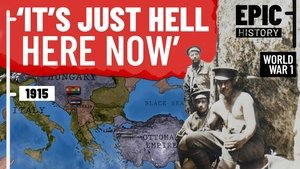
1. World War 1 - 1915
⏱ 13 minHere’s a further condensed version: *World War One - 1915* highlights German Zeppelin air raids on Britain, and the Royal Navy's victory at the Battle of Dogger Bank. Germany began unrestricted submarine warfare, while on the Eastern Front, Germany defeated Russia at Masurian Lakes, but Russia captured 100,000 Austro-Hungarians at Przemyśl. Allied ships faced heavy losses in the Dardanelles, and troops, including ANZACs, were pinned at Gallipoli. On the Western Front, British offensives failed, and Germany used chemical weapons at Ypres. The Armenian Genocide began in April. The sinking of *Lusitania* outraged the US, prompting Germany to suspend attacks on passenger ships. Italy joined the war, attacking Austria-Hungary, and Allied offensives in France resulted in heavy losses. In the Balkans, Serbia was overrun by the Central Powers, with the Serbian army suffering catastrophic losses during its retreat.
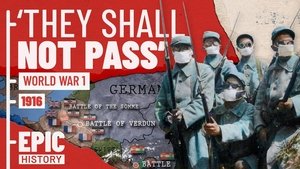
2. World War 1 - 1916
⏱ 14 minWorld War One: 1916' covers the great battles of Verdun and the Somme on the Western Front, as well as Russia's Brusilov Offensive on the Eastern Front. In the Middle East, British forces surrender at Kut, while the Arab Revolt begins in the Hejaz. But unbeknownst to Arab leaders, the British and French have secretly agreed to carve up the Middle East after the war in the secret Sykes-Picot Agreement. The war's only great naval battle is fought at Jutland, while the Italians face crisis after the surprise Austro-Hungarian attack at Asiago. In the Balkans, Romania joins the war on the Allied side, but is soon overrun by the Central Powers. CORRECTION: 13.10 - Karl was the great-nephew, not the son, of Emperor Franz Josef I.
3. World War 1 - 1917
⏱ 14 minHere’s a revised version under 1000 characters: In *1917*, Germany reintroduces unrestricted submarine warfare, hoping to defeat Britain by cutting off food supplies. This leads to an American declaration of war. In Russia, revolution forces Tsar Nicholas II to abdicate, and the Provisional Government vows to continue the war. However, the Bolshevik Revolution leads to an armistice by year's end. On the Western Front, major battles include Arras (with Canada’s capture of Vimy Ridge), the Nivelle Offensive, Messines, and Third Ypres (Passchendaele). In November, Britain launches the first mass tank attack at Cambrai. In Italy, Germany's reinforcements lead to victory at Caporetto. In the Middle East, Britain wins at Kut, Baghdad, and Gaza, allowing them to enter Jerusalem. The Arab Revolt captures Aqaba, aided by TE Lawrence, but the Balfour Declaration complicates British promises to the Arabs about independence.
4. World War 1 - 1918
⏱ 14 minHere’s a further condensed version under 1000 characters: In 1918, Woodrow Wilson proposes his 'Fourteen Points' for peace. Russia exits the war with the Treaty of Brest-Litovsk, freeing German troops for Ludendorff's Spring Offensive. Despite early success, it's halted at Amiens by British and Australian forces. In April, the Red Baron is killed. US troops arrive, winning at Cantigny and Belleau Wood. The Allies' Hundred Days Offensive breaks the Hindenburg Line, defeating Germany. In the Balkans, victory at Dobro Pole forces Bulgaria to surrender. In the Middle East, British forces win at Megiddo, occupying Damascus and Aleppo. The Ottoman Empire and Austria-Hungary soon sign armistices. Revolution in Germany leads to the Kaiser’s abdication, and an armistice on November 11. The 1919 Treaty of Versailles imposes harsh penalties on Germany, creating resentment later exploited by Adolf Hitler.
5. Battle of the Somme 1916
⏱ 15 minThis is the story of the first day of the Somme Offensive, 1 July 1916 - the single bloodiest day in British military history. 57,000 British soldiers became casualties, most within a few hours of the initial attack. The offensive was part of a doomed attempt to break the deadlock of trench warfare. But behind the myths lies the story of an elaborately-planned battle, fought against a determined and experienced German enemy, and a struggle that was seen at the time as both unavoidable and necessary. The Battle of the Somme, of which 1st July was just the first, disastrous day, raged for another four months, and was vital not only in diverting German forces away from their assault on the French at Verdun, but in teaching Britain's 'citizen army' how to fight a modern war against the German army.
6. History of Russia Part 2: Birth of a European Power
⏱ 10 minHere’s a condensed version under 1000 characters: Russia, emerging from the Time of Troubles, is liberated from Polish forces by Prince Pozharsky and Kuzma Minin. The Zemsky Sobor elects 16-year-old Mikhail Romanov as Tsar, starting the Romanov dynasty. Under the Romanovs, all peasants become serfs, and Patriarch Nikon's reforms split the Russian Orthodox Church. The Thirteen Years War (1654–67) brings Smolensk and Kiev under Russian control, while Stenka Razin leads a rebellion. In 1689, Peter the Great takes power, modernizes Russia, builds a navy, and reforms government, industry, and education. He wins major victories against the Ottomans and Sweden, including the famous Battle of Poltava. Later, Empress Anna sponsors Bering’s exploration of Alaska, and Empress Elizabeth leads Russia to victory in the Seven Years War. Catherine the Great seizes power after overthrowing her husband Peter III, expanding Russia and cementing her legacy.
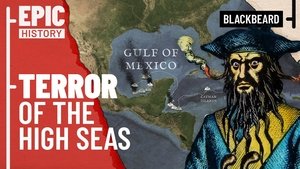
7. The Most Feared Pirate in History: Blackbeard - The True Story
⏱ 6 minEdward Thatch, known as Blackbeard, likely began his pirate career around 1717 under Captain Ben Hornigold in Nassau. He later commandeered Stede Bonnet's sloop, renaming it "Revenge." Blackbeard terrorized the American eastern seaboard and the Caribbean, capturing a French slave ship he renamed "Queen Anne's Revenge," which he used to attack from Guadeloupe to the Gulf of Mexico. In 1718, he blockaded Charleston, South Carolina, for ransom. After his flagship ran aground, possibly intentionally, he accepted a pardon in Bath, North Carolina, but soon returned to piracy. He was killed in a battle led by Lieutenant Maynard at Ocracoke Island, organized by Virginia's Governor Spotswood.
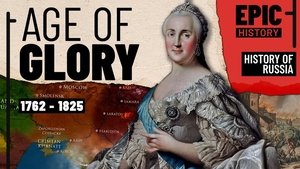
8. History of Russia Part 3: Age of Glory
⏱ 9 minCatherine the Great's reign marked Russia's cultural and territorial expansion, including annexing Crimea and partitioning Poland. She settled Novorossiya and welcomed European migrants, but distanced herself from liberalism after the French Revolution. Her son Paul's rule, though marked by military successes against France, ended in his assassination. Alexander I introduced reforms and faced Napoleon's invasion in 1812, which ended disastrously for the French. Alexander also expanded into Finland, the Caucasus, and the Balkans, and became King of Poland.
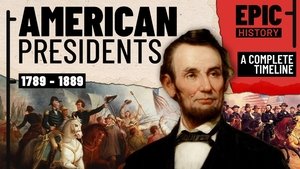
9. American Presidents: A Complete Timeline - Washington to Cleveland (1/2)
⏱ 9 minPart 1 of our animated timeline of America's first 44 Presidents, from George Washington and the Founding Fathers to the trauma of Civil War and Reconstruction.
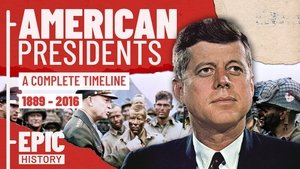
10. American Presidents: A Complete Timeline - Harrison to Obama (2/2)
⏱ 12 minPart 2 of our timeline of America's first 44 Presidents, from Benjamin Harrison to Barack Obama.

11. American Presidents: Complete Timeline - 44 Presidents in 3 Minutes
⏱ 3 minAll 44 Presidents in 150 seconds! A timeline of all the presidents in chronological order. If you want more detail check out Epic History TV's 2-part guide to America's Presidents:
12. History of Russia Part 4: 'What Is to Be Done?'
⏱ 10 minNicholas I took the Russian throne in 1825, surviving the Decembrist Revolt, and embraced "Orthodoxy, Autocracy, and Nationality." His reign saw victories over Persia and the Ottoman Empire, and the suppression of the Polish November Uprising. Russia's cultural landscape was marked by Pushkin's death in 1837, followed by the opening of the Moscow-St. Petersburg railway in 1851. Russia's conflict with Britain and France in the Crimean War led to a harsh peace treaty. Alexander II, succeeding in 1855, abolished serfdom in 1861, earning him "The Liberator" title, though economic struggles persisted. Russia expanded in Central Asia, clashing with Britain in "The Great Game." In 1867, Russia sold Alaska to the U.S. for $7.2 million. After defeating the Ottomans in 1877-78, Alexander II was assassinated by "The People's Will" in 1881, frustrated by slow reforms.
13. History of Russia Part 5: The Last Romanov
⏱ 12 minFollowing Alexander II's assassination, Alexander III's reign tightened autocratic control, with the Okhrana policing revolutionaries and anti-Semitic pogroms occurring. Economic modernization under Sergei Witte included the Trans-Siberian railway. Nicholas II's rule saw defeat in the Russo-Japanese War, leading to the 1905 Revolution, which forced concessions and a constitution. Prime Minister Stolypin's land reforms aimed to aid peasants but he was assassinated in 1911. Russia's involvement in WWI led to massive losses and domestic unrest, culminating in the 1917 February Revolution, where Nicholas II abdicated, setting the stage for the Bolshevik takeover amid ongoing chaos.
14. History of Russia - Rurik to Revolution
⏱ 41 minFrom Prince Rurik to the Russian Revolution, this is a compilation of the first 5 episodes of Epic History TV's History of Russia.
20179 episodes
1. The First Crusade: The Bloody Road to Jerusalem (1/2)
⏱ 15 minThe First Crusade was one of the most extraordinary, bloody and significant episodes in medieval history. It began with an appeal for aid from the Christian Byzantine Empire, threatened by the rising power of the Muslim Seljuk Turks. But when Pope Urban II preached a sermon at Clermont in 1095, the result was unlike anything ever seen before. The Pope offered spiritual salvation to those willing to go east to aid their fellow Christians in a holy war, and help liberate Jerusalem from Muslim rule. Knights and peasants alike signed up in their thousands, leading to the disastrous People's, or Peasants', Crusade, then to a much more organised and powerful Princes' Crusade. Their forces gathered at Constantinople, where they made an uneasy alliance with Byzantine Emperor Alexius I Comnenus. Entering Anatolia, they helped to win back the city of Nicaea, then won a decisive but hard-fought victory at Dorlyaeum, before marching on the great city of Antioch...
2. The First Crusade: Jerusalem Falls (2/2)
⏱ 12 minPart 2 of Epic History TV's story of the First Crusade continues with the Siege of Antioch. The Crusaders endure immense hardships outside the city walls, but finally take Antioch thanks to a ruse by Bohemond of Taranto. Against the odds, and inspired by their recent discovery of a relic believed to be the 'Holy Lance', the Crusaders then defeat the Seljuk army of Kur Burgha. After disagreements within the Crusader camp, the army finally moves on to Jerusalem in the spring of 1099. During a full-scale assault of the city walls, Godfrey of Bouillon's troops gain a foothold in the defences, and Crusader troops pour into the city. A bloodbath follows. Victory results in the creation of four Crusader states, but their existence is precarious, surrounded by hostile Muslim powers, who will one day return with a vengeance.
3. The Greatest General in History? Alexander invades the Persian Empire
⏱ 16 minThe incredible story of Alexander the Great and his conquest of the known world is brought to life with animated maps, images from Osprey Publishing and Total War game footage. In Part 1, we look at the background: Persia's invasion of Greece in 480 BC, the rise of Macedonia under King Philip II, and the formation of the Hellenic League. Following Philip's assassination, his 20 year old son Alexander inherited the kingdom and a formidable army. In 334 BC he used this army to launch a invasion of the Persian Empire, winning a crucial victory at the River Granicus.

4. The Greatest General in History? Alexander and the Battle of Issus
⏱ 13 minAlexander the Great's astonishing military campaign against the Persian Empire is brought to life with animated maps, images from Osprey Publishing and Total War game footage. In Part 2, Alexander cuts the Gordian Knot, then defeats the army of Darius III at the Battle of Issus. He goes on to conquer the island-city of Tyre in a brutal siege, and seizes control of the rich and ancient land of Egypt, where he is recognised as the new pharaoh. He founds a new city at Alexandria, and at the oracle of Siwah, he is welcomed as son of Amun - king of the gods. King Agis of Sparta leads a rebellion against Macedonian rule back in Greece, but is crushed by Antipater, leaving Alexander free to continue his advance into the heartlands of Persia...
5. The Greatest General in History? Alexander Smashes the Persians
⏱ 11 minAlexander the Great has subjugated the Persian Empire west of the Euphrates, winning battles at the Granicus and Issus, capturing the city of Tyre and seizing control of Egypt. Now he heads east for a final showdown with Darius III, King of Kings, at Gaugamela. The great clash there will determine the fate of two empires, and win Alexander everlasting glory. But in the wake of victory, he faces the challenge of ruling over his new, sprawling empire, and dealing with usurpers and rebellion.
6. The Greatest General in History? Alexander - To the Ends of the Earth
⏱ 17 minAlexander the Great has defeated King Darius at the Battle of Gaugamela, and now pursues the Persian usurper Bessus east into modern Afghanistan. He will face revolt, guerilla war and Scythian nomads, but finally he reaches the furthest point of the Persian Empire. He marries Roxana, daughter of a Bactrian lord, then continues his advance into modern Pakistan and India, where he clashes with King Porus of Pauravas at the Battle of the Hydaspes...
7. The Greatest General in History? Alexander the Great (All Parts)
⏱ 53 minEpic History TV's complete four-part history of Alexander the Great in one video. Follow the incredible story of the Macedonian king as he embarks on the total conquest of the ancient world's greatest superpower, the Persian Empire. With dramatic victories at the Granicus, Issus and Gaugamela, Alexander defeats Darius III and claims the throne of Persia. But his campaign to subdue the empire's easternmost provinces and reach the edge of the known world will take him into modern Afghanistan, Pakistan and the frontier of India, where he meets the Indian king Porus in battle at the Hydaspes. This is the complete overview of Alexander's conquests, a 10 year period of immense drama and historical significance, as the young Macedonian king's breathtaking achievements ushered in a new era in European and Middle Eastern history - the Hellenistic Age.
8. The Brink of War: Suez Crisis: (1/2)
⏱ 14 minIn 1956, an international crisis over control of the Suez Canal put Britain and France into direct conflict with President Nasser of Egypt, a proud Arab nationalist determined to stand up to foreign powers meddling in Egyptian affairs. To understand the deep roots of the crisis we go right back to the creation of the canal in 1869, and the long history of British intervention in Egypt - all with the usual Epic History TV maps as well as loads of brilliant and rarely-seen archive film from the period.
9. A Global Flashpoint: Suez Crisis (2/2)
⏱ 15 minIn 1956, an international crisis over control of the Suez Canal put Britain and France into direct conflict with President Nasser of Egypt, a proud Arab nationalist determined to stand up to foreign powers meddling in Egyptian affairs. Part 2 explores how Britain, France and Israel cooked up a secret plan to invade Egypt, overthrow Nasser and reassert their standing as global powers. But when the international community, and in particular the United States, condemned their actions, the aggressors were forced into a humiliating climbdown. The repercussions for the Middle East and global history were long-lasting and profound.
20187 episodes

1. Francis Drake Sails Around the World
⏱ 12 minWatch the story of Magellan's voyage on Simple History

2. Napoleon's First Victory: The Siege of Toulon 1793
⏱ 14 minIn 1793, amidst the French Revolution's Reign of Terror, France faced internal revolts and external threats, including the British occupation of Toulon, a key naval base. The inexperienced General Carteaux, with the aid of the young artillery officer Napoleon Bonaparte, was tasked with retaking the city. Bonaparte, recommended by Saliceti, quickly organized the artillery, despite shortages, and proposed a strategy focusing on capturing strategic forts to bombard the Allied fleet. After initial setbacks due to Carteaux's hesitation, the professional General Dugommier took command, endorsing Bonaparte's plan. In a fierce battle, Bonaparte's leadership helped secure French victory, leading to his promotion to Brigadier General. The fall of Toulon marked a turning point for the French Republic, with Bonaparte emerging as a significant military figure, setting the stage for his future prominence.

3. Napoleonic Wars: Battle of Austerlitz 1805
⏱ 17 minNapoleon crowned himself Emperor in 1804. Soon after, he faced the Third Coalition of European powers. His Grande Armée, using the new corps system, swiftly defeated Austria at Ulm and occupied Vienna. The decisive Battle of Austerlitz followed on December 2, 1805. Napoleon's strategy lured Allies into attacking his right while he struck their center on the Pratzen Heights. The French victory shattered the Coalition, forcing Austria to accept harsh terms. However, Britain remained undefeated at sea after Nelson's victory at Trafalgar. The battle showcased Napoleon's tactical brilliance and the effectiveness of his army's organization. It solidified French dominance on land, while Britain ruled the seas. This stalemate between the "whale and the elephant" set the stage for years of continued conflict in Europe. The war's impact was summed up by British PM Pitt: "Roll up that map of Europe, it will not be wanted these ten years.
4. The Greatest Speech in History? Alexander the Great and the Opis Mutiny
⏱ 8 minAlexander the Great, becoming king at 20, expanded Macedonia's rule over Greece, crushed the Persian Empire, and ventured to India by his death at 32. Facing a mutiny at Opis, he harshly punished the leaders and delivered a dramatic speech, as recounted by historian Arrian, emphasizing his achievements and leadership, though the exact words are debated.
5. Napoleonic Wars: Battle of Jena-Auerstedt 1806
⏱ 16 minFresh from his great victory at Austerlitz, Napoleon's next campaign saw him take on Prussia in the autumn of 1806. Prussia's army had been feared throughout Europe since the days of Frederick the Great, but in just 5 weeks of 'Napoleonic Blitzkrieg', the French Emperor showed that those days were long gone.
6. Napoleonic Wars: Battle of Friedland 1807
⏱ 20 minNapoleon brings his war against Russia and Prussia to an end with victory at Friedland, leading to the famous Tilsit conference, after which Napoleon stood at the peak of his power.
7. History of a Mediterranean Superpower: The Rise of Venice
⏱ 13 minPart 1 of Epic History's guide to the rise of Venice - from a community of refugees hiding out in the Italian lagoons, to one of the medieval world's most powerful maritime states.
201911 episodes
1. Napoleonic Wars: Invasion of Spain 1808
⏱ 19 minIn 1808, Napoleon's rivalry with Britain led to an ill-fated intervention in Portugal and Spain, that sparked a nationalist revolt against the French. At Bailén Napoleon's Empire suffered its first major defeat, and though Napoleon himself then arrived in Spain to reassert French military dominance, he could not prevent the escape of Sir John Moore's small British army, after its defensive victory at Corunna on 16 January 1809. The British army would return, under new leadership, to play a major part in his downfall.

2. Napoleon Defeated: Aspern 1809
⏱ 19 minIn 1809, with Napoleon and his best troops bogged down in Spain, Austria decided to try to get revenge for her humiliation at Austerlitz three years before. Archduke Charles led an invasion of France's ally Bavaria, but Napoleon raised fresh troops and transformed the strategic situation in four days of hard fighting along the Danube. But having taken Vienna, Napoleon's overconfidence led to a desperate battle at Aspern-Essling, resulting in his first major defeat as Emperor, and the death of his closest friend.
3. Hear Alexander the Great's Legendary Speech in Ancient Greek!
⏱ 8 minAlexander is played by Charlie Merriman, an actor who studied Ancient Greek and Latin at Cambridge University. With Barefaced Greek, he performs in plays and videos in Ancient Greek.
4. Napoleonic Wars: Battle of Wagram 1809
⏱ 14 minSix weeks after his bloody repulse at the Battle of Aspern-Essling, Napoleon led his reinforced army back across the Danube. The resulting clash with Archduke Charles's Austrian army was the biggest and bloodiest battle yet seen in European history, and despite heavy French losses, resulted in a decisive strategic victory for the French Emperor.
5. Napoleonic Wars: The Peninsular War 1809 - 11
⏱ 20 minIn 1809, as Napoleon fought the Austrians at Wagram, the war in Spain and Portugal continued to rage. The French had inflicted several heavy defeats on Spanish field armies, but now they faced a popular insurgency as well as a well-trained Anglo-Portuguese army led by British general Lord Wellington. The Peninsular War, as it became known, became Napoleon's 'bleeding ulcer', or his Vietnam, costing his empire nearly quarter of a million soldiers, in a war that looked increasingly unwinnable.
6. Napoleonic Wars: Battle of Salamanca 1812
⏱ 16 minIn 1812 French forces in Spain were severely overstretched, as Napoleon withdrew the best troops for his invasion of Russia. Wellington saw an opportunity to strike. First he secured the strategic fortress-cities of Ciudad Rodrigo and Badajoz, both taken in bloody assaults, then advanced to Salamanca, where his Anglo-Portuguese army met Marshal Marmont's French army in one of the most decisive clashes of the Peninsular War.
7. Quick Guide to Napoleonic Infantry Tactics
⏱ 6 minA quick guide to infantry tactics and formations of the Napoleonic period, which first appeared in our video on the Battle of Aspern. In this video we try to explain why lining up shoulder-to-shoulder was not as stupid as it first seems, and how different formations were used to maximise firepower, mobility and defence. All achieved through the miracle of drill.
8. Napoleonic Wars: March of the Eagles 1805 - 09
⏱ 95 minThe Napoleonic Wars (1803 - 1815) brought upheaval and destruction to Europe on an unprecedented scale. This is the story of the first half of those wars, when Napoleon Bonaparte, self-crowned Emperor of the French, ruled supreme on the battlefield and international stage - the greatest man of his age. But in the midst of victory, the seeds of his eventual downfall were sown. This video is a compilation of the first six episodes of Epic History TV's Napoleonic Wars series.

9. Napoleonic Wars: Napoleon Invades Russia 1812
⏱ 19 minIn 1812 Napoleon invaded Russia with the largest army Europe had ever seen, composed of troops from France as well as Poland, Germany, Italy and several other allied states. The campaign that followed saw the Russians use scorched earth tactics to deny the enemy supplies, while Napoleon advanced further and further into Russia, searching in vain for the decisive blow that would force Emperor Alexander to negotiate peace.
10. Napoleonic Wars: Battle of Borodino 1812
⏱ 17 minIn 1812 Napoleon invaded Russia with the largest army Europe had ever seen. As it advanced, the Russian army retreated, and by September Napoleon's army had marched 470 miles into the depths of Russia. 70 miles west of Moscow near the village of Borodino, the Russian army, under a new commander, General Kutuzov, finally made a stand. The battle that followed was the bloodiest day's fighting of the Napoleonic Wars, and proved one of the most infamous battles of history.

11. Napoleonic Wars: Retreat from Moscow 1812
⏱ 27 minIn 1812 Napoleon invaded Russia with the largest army Europe had ever seen. But after winning a costly victory at Borodino and occupying Moscow, Napoleon's invitation to Russian Emperor Alexander to make peace met with no response. Napoleon now found himself 500 miles from friendly territory, outnumbered, poorly supplied, and with winter approaching. What followed was one of the most harrowing and disastrous events in military history - the Retreat from Moscow - in which Russian attacks, freezing weather and starvation virtually wiped out the once-proud Grande Armée.
202010 episodes
1. Napoleonic Wars: Battle for Germany 1813
⏱ 25 minIn 1813, following his disastrous invasion of Russia, Napoleon faced a desperate battle to save his empire. His enemies were gaining in strength, as Prussia and Sweden joined the Sixth Coalition against him, while Russian armies advanced across Poland and into Germany. The French Emperor worked miracles to raise a new Grande Armée of young conscripts, leading them to victory at Lützen and Bautzen. But Napoleon knew everything might ultimately depend on Austria - which side would his father-in-law, Austrian Emperor Francis I, chose to support? The matter would be settled after a fateful and ill-tempered meeting in Dresden between Napoleon and Austrian foreign minister von Metternich...
2. Napoleonic Wars: Battle of Leipzig 1813
⏱ 32 minIn October 1813 Napoleon faced the combined might of the Sixth Coalition (Russia, Austria, Prussia, Sweden) near Leipzig, in what would prove to be the decisive battle of his career. Outnumbered, virtually encircled, Napoleon opted for a high-risk strategy of striking against Schwarzenberg's Army of Bohemia, before the other Coalition armies could come to his aid. The four-day Battle of Leipzig would be the largest and bloodiest battle in European history before the First World War, and one that changed the destiny of Europe.
3. Napoleonic Wars: Battle for France 1814
⏱ 32 minFollowing his defeat in the giant Battle of Leipzig (Oct 1813), Napoleon's final defeat seemed only a matter of time. But when Coalition armies crossed the Rhine and invaded France, Napoleon - outnumbered 4 to 1 - began one of the most daring and brilliant campaigns in military history. However Napoleon's hope that his victories would cause a fatal split in the Coalition did not materialise, and eventually, Schwarzenberg and Blücher's dash for Paris would seal the fate of the Napoleonic Empire.
4. Napoleonic Wars: The Invasion of Russia (All Parts)
⏱ 63 minIn 1812 Napoleon invaded Russia with the largest army Europe had ever seen, composed of troops from France as well as Poland, Germany, Italy and several other allied states. The campaign that followed saw the Russians use scorched earth tactics to deny the enemy supplies, while Napoleon advanced further and further into Russia, searching in vain for the decisive blow that would force Emperor Alexander to negotiate peace. Even after winning a costly victory at Borodino and occupying Moscow, Napoleon's invitation to negotiate received no response. Napoleon found himself 500 miles from friendly territory, outnumbered, poorly supplied, and with winter approaching. What followed was one of the most harrowing and disastrous events in military history - the Retreat from Moscow - in which Russian attacks, freezing weather and starvation virtually wiped out the once-proud Grande Armée.
5. Napoleon's Marshals: Pérignon, Brune, Sérurier, Kellermann, Grouchy, Moncey, Poniatowski, Jourdan.
⏱ 26 minIn 1804 Napoleon created 18 'Marshals of the Empire', to serve as the senior officers of the Grande Armée. He created a further 8 before his abdication. A few were aristocrats, but others were the sons of shopkeepers or tailors. The most favoured became princes and kings. Among their ranks were legendary figures such as Marshals Lannes, Soult, Davout and Massena, but also much less well know figures like Pérignon, Brune and Moncey. Our series will explore the lives of all 26 Marshals, and rank them according to our own judgement of their achievements as Marshals.

6. How to Build the Perfect Medieval Castle
⏱ 18 minThis is Epic History TV's guide to building the perfect castle, based on the development of European medieval castles over 400 years of history. We trace the origins of the castle in the feudal system that emerged in France c.900 CE, and look at the early motte-and-bailey castle, used by the Normans to subjugate England and Wales in the 11th century. We then look at how castle's became stronger and more sophisticated, with the addition of stone curtain walls, massive keeps, towers (square, round and D-shaped), as well as powerful gatehouses, barbicans, machicolations and moats.
7. Napoleon's Marshals: Bernadotte, Augereau, Lefebvre, Mortier, Marmont.
⏱ 30 minIn 1804 Napoleon created 18 'Marshals of the Empire', to serve as the senior officers of the Grande Armée. He created a further 8 before his abdication. A few were aristocrats, but others were the sons of shopkeepers or tailors. The most favoured became princes and kings. Among their ranks were legendary figures such as Marshals Lannes, Soult, Davout and Massena, but also much less well know figures like Pérignon, Brune and Moncey. Our series will explore the lives of all 26 Marshals, and rank them according to our own judgement of their achievements as Marshals.
8. Napoleon's Marshals: Saint-Cyr, Oudinot, Victor, Murat.
⏱ 32 minIn 1804 Napoleon created 18 'Marshals of the Empire', to serve as the senior officers of the Grande Armée. He created a further 8 before his abdication. A few were aristocrats, but others were the sons of shopkeepers or tailors. The most favoured became princes and kings. Among their ranks were legendary figures such as Marshals Lannes, Soult, Davout and Massena, but also much less well know figures like Pérignon, Brune and Moncey. Our series will explore the lives of all 26 Marshals, and rank them according to our own judgement of their achievements as Marshals.
9. Napoleon's Marshals: Bessières, Macdonald, Masséna.
⏱ 28 minIn 1804 Napoleon created 18 'Marshals of the Empire', to serve as the senior officers of the Grande Armée. He created a further 8 before his abdication. A few were aristocrats, but others were the sons of shopkeepers or tailors. The most favoured became princes and kings. Among their ranks were legendary figures such as Marshals Lannes, Soult, Davout and Massena, but also much less well know figures like Pérignon, Brune and Moncey. Our series will explore the lives of all 26 Marshals, and rank them according to our own judgement of their achievements as Marshals.
10. What made the Vikings so Dangerous? 5 Viking Deaths and What They Tell Us About the Viking Mindset
⏱ 23 minIn AD 793, Vikings from Scandinavia began raiding Europe, striking fear with their sudden attacks, exemplified by the Lindisfarne raid. For 300 years, they terrorized and conquered, leveraging their naval prowess. Professor Tom Shippey explores the "Viking mindset" through their sagas, highlighting a fascination with death and a dark humor. Key figures like Ragnar Lodbrok, whose legendary death motivated his sons' vengeance, and King Hrolf, whose hall's discovery supports saga authenticity, illustrate this mindset. The sagas, though often fictional, reflect real cultural attitudes towards death and humor, seen in battles like Stamford Bridge where Harald Hardrada's poetic defiance marked the Viking era's end, leading to William the Conqueror's reign in England. This period showcases Vikings not just as warriors but as bearers of a unique cultural identity, blending bravery with a grim, humorous outlook on life and death.
202115 episodes
1. Apollo Program: A Disastrous Beginning
⏱ 17 minWe delve into NASA's Apollo Program, sparked by President Kennedy's goal to land on the moon by 1969, amidst Cold War tensions with the Soviet Union. Key figure Werner von Braun, once of Nazi Germany's V2 program, led NASA's rocket development. After triumphs in Mercury and Gemini, tragedy struck with Apollo 1, where astronauts perished in a launch pad fire. NASA rebounded, redesigning for safety, and succeeded with Apollo 7. Apollo 8's historic moon orbit and the iconic 'Earthrise' photo set the stage for the first moon landing attempt in 1969.
2. Napoleon's Marshals: Suchet, Ney, Soult.
⏱ 37 minIn 1804 Napoleon created 18 'Marshals of the Empire', to serve as the senior officers of the Grande Armée. He created a further 8 before his abdication. A few were aristocrats, but others were the sons of shopkeepers or tailors. The most favoured became princes and kings. Among their ranks were legendary figures such as Marshals Lannes, Ney, Soult, Davout and Massena, but also much less well know figures like Pérignon, Brune and Moncey. Our series will explore the lives of all 26 Marshals, and rank them according to our own judgement of their achievements as Marshals.

3. The Viking Mindset: Ragnar's Death Song and Other Sagas
⏱ 8 minThe Saga of Ragnar details Ragnar's death and his final song, the Krákumál, which is both a death and life song. Ragnar, awaiting a feast in Odin’s hall, faces death with defiance, as expressed in the line "læjandi skalk deyja" ("laughing shall I die"). Similarly, King Hrolf’s saga, blending fact with fairy-tale, features the were-bear Bödvar Bjarki. The Jomsvikings’ downfall, tied to their boastful politics and the Battle of Hjörungavágr, contrasts with the more historical Battle of Stiklarstaðir, where the poet Thormod, mortally wounded, composes his final incomplete poem. Harald Hardrada, a patron of poetry, completes Thormod’s verse. The Viking belief in Valhalla, where fallen warriors feast eternally, reflects a prominent but not universal afterlife concept among Norse gods, as recorded by Snorri Sturluson.
4. Napoleon's Marshals: Berthier, Lannes, Davout.
⏱ 43 minIn 1804 Napoleon created 18 'Marshals of the Empire', to serve as the senior officers of the Grande Armée. He created a further 8 before his abdication. A few were aristocrats, but others were the sons of shopkeepers or tailors. The most favoured became princes and kings. Among their ranks were legendary figures such as Marshals Lannes, Ney, Soult, Davout and Massena, but also much less well know figures like Pérignon, Brune and Moncey. Our series will explore the lives of all 26 Marshals, and rank them according to our own judgement of their achievements as Marshals.
5. Apollo Program: Eagle Has Landed
⏱ 17 minWe'll cover NASA's Apollo Program, from President Kennedy's lunar landing goal to the tragic Apollo 1 fire. Despite setbacks, NASA succeeded with Apollo 7 and Apollo 8, leading to the first manned orbit of the moon. In 1969, Armstrong, Aldrin, and Collins aimed to make history with the first lunar landing attempt.
6. Napoleonic Wars: Battle of Vitoria 1813
⏱ 21 minIn May 1813, as Napoleon launches a desperate bid to save his empire following the disastrous defeat in Russia, the situation in Spain is particularly precarious. French forces have been weakened to make up for the enormous losses in Russia. But Wellington's Anglo-Portuguese army, as well as the Spanish guerrillas, are stronger than ever. Wellington's advance into Spain will liberate Madrid a second time, and conclude with the final showdown of the Peninsular War - the Battle of Vitoria.

7. Apollo Program: The Brink of Disaster
⏱ 25 minWe explore the dramatic story of NASA's Apollo Program, beginning with President Kennedy's ambitious deadline for a lunar landing after the Soviet Union took the lead in the 'Space Race'. Following the success of Apollo 11, and the fulfilment of Kennedy's goal of landing a man on the Moon, questions hung over the future of the Apollo Program. With declining public interest in Moon missions, and government funding slashed, NASA focused on scientific research. But the final phase of the Program is best remembered for the dramatic near-disaster of Apollo 13, in which the ingenuity of astronauts and Mission Control was pushed to the limit.
8. World War One (All Parts) (age-restricted)
⏱ 64 minAll 5 parts of Epic History TV's history of World War One in one place (re-edited in 2021). From the Schlieffen Plan to the Versailles Treaty, a global history of the entire conflict.
9. Napoleonic Wars: Downfall 1809 - 14
⏱ 204 minThis compilation of our Napoleonic Wars series covers the period from 1809 to the Emperor's abdication in 1814. Along the way we encounter the horrors of the French occupation of Spain and Portugal, Napoleon's disastrous invasion of Russia, and the great struggle for German in 1813. The series concludes with arguably Napoleon's finest campaign - his doomed defence of Paris in 1814.
10. Apollo Program: Tragedy and Triumph (All Parts)
⏱ 54 minThis is the dramatic story of NASA's Apollo Program, from President Kennedy's ambitious lunar landing goal, through the tragedies and triumphs, to the future of the program. It covers the significant milestones such as the Apollo 1 disaster, the successful Apollo 11 lunar landing, and the dramatic near-disaster of Apollo 13.
11. Salamis 480 BC: The Battle for Greece
⏱ 27 minThe Battle of Salamis was one of the decisive battles of world history, in which the small city-states of ancient Greece joined forces to take on the mighty Persian Empire. After the defeat and death of the Spartan King Leonidas at Thermopylae, the Persians burned Athens, and the Greek alliance seemed close to collapse. But thanks to the foresight of Athenian general Themistocles and the heroism of the Greek fleet, the Persians would meet with disaster in the narrow straits of Salamis.
12. Belisarius: The Emperor's Sword (1/6)
⏱ 22 minIn the 6th century AD, during the reign of Emperor Justinian, the Roman Empire experienced an extraordinary resurgence, reconquering lands - including Italy, North Africa and Rome itself - that had been lost to the 'barbarians' a century before. Leading these campaigns, a brilliant Roman general named Flavius Belisarius - a skilled tactician, inspirational leader, pragmatic and humane.
13. Belisarius: Conquest of the Vandals (2/6)
⏱ 22 minIn the 6th century AD, during the reign of Emperor Justinian, the Roman Empire experienced an extraordinary resurgence, reconquering lands - including Italy, North Africa and Rome itself - that had been lost to the 'barbarians' a century before. Leading these campaigns, a brilliant Roman general named Flavius Belisarius - a skilled tactician, inspirational leader, pragmatic and humane.
14. An Epic History of the First Crusade (All Parts)
⏱ 26 minThe First Crusade was one of the most extraordinary, bloody and significant episodes in medieval history. It began with an appeal for aid from the Christian Byzantine Empire, threatened by the rising power of the Muslim Seljuk Turks. But when Pope Urban II preached a sermon at Clermont in 1095, the result was unlike anything ever seen before.
15. Belisarius: The Battle of Rome (3/6)
⏱ 24 minIn the 6th century AD, during the reign of Emperor Justinian, the Roman Empire experienced an extraordinary resurgence, reconquering lands - including Italy, North Africa and Rome itself - that had been lost to the 'barbarians' a century before. Leading these campaigns, a brilliant Roman general named Flavius Belisarius - a skilled tactician, inspirational leader, pragmatic and humane.
202214 episodes

1. Belisarius: Conquest of Italy (4/6)
⏱ 21 minIn the 6th century AD, during the reign of Emperor Justinian, the Roman Empire experienced an extraordinary resurgence, reconquering lands - including Italy, North Africa and Rome itself - that had been lost to the 'barbarians' a century before. Leading these campaigns, a brilliant Roman general named Flavius Belisarius - a skilled tactician, inspirational leader, pragmatic and humane.

2. Days That Shook The World: Russia's Two Revolutions of 1917
⏱ 14 minThe video covers the major events of Russia's two revolutions of 1917 - the February Revolution that ended Tsarist rule and the October Revolution that brought the Bolsheviks to power. It explains the causes of Tsar Nicholas II's unpopularity, including the role of Rasputin, Russia's involvement in World War One, and the events in Petrograd that led to the Tsar's abdication. It also discusses the Provisional Government's challenges, Prime Minister Kerensky's struggles, and the Bolshevik coup led by Lenin and Trotsky. The aftermath led to a brutal civil war and the formation of the Soviet Union in 1922.

3. Belisarius: War with the Sassanids (5/6)
⏱ 25 minIn the 6th century AD, during the reign of Emperor Justinian, the Roman Empire experienced an extraordinary resurgence, reconquering lands - including Italy, North Africa and Rome itself - that had been lost to the 'barbarians' a century before. Leading these campaigns, a brilliant Roman general named Flavius Belisarius - a skilled tactician, inspirational leader, pragmatic and humane.

4. Suez Crisis (All Parts): Causes, Conflict and Global Repercussions
⏱ 27 minIn 1956, an international crisis over control of the Suez Canal put Britain and France into direct conflict with President Nasser of Egypt, a proud Arab nationalist determined to stand up to foreign powers meddling in Egyptian affairs.

5. Belisarius: The Last Battle (6/6)
⏱ 29 minIn the 6th century AD, during the reign of Emperor Justinian, the Roman Empire experienced an extraordinary resurgence, reconquering lands - including Italy, North Africa and Rome itself - that had been lost to the 'barbarians' a century before. Leading these campaigns, a brilliant Roman general named Flavius Belisarius - a skilled tactician, inspirational leader, pragmatic and humane.
6. Russia's First Revolutionaries: The Decembrists
⏱ 24 minThis is the story of the Decembrists, a group of young Russian aristocrats and army officers, including decorated veterans of the Napoleonic Wars, who returned home after the conflict hoping Russia would embark on a course of modernising reform. Instead, Emperor Alexander turned his back on the liberal ideals of his youth. He opposed all attempts to reform Russia's autocratic government, or end its brutal system of serfdom. The Decembrists, organising themselves into secret societies and publishing their own draft constitutions for a future Russia, decided that the only way forward was by revolution.

7. Revolt Against the Tsar: The Decembrists
⏱ 30 minThis is the story of the Decembrist revolt of 1825, in which a group of army officers tried to change the course of Russian history by overturning the country's traditional systems of autocratic government and serfdom. In St.Petersburg, the chaos of the interregnum following Emperor Alexander's death was exploited by the Decembrists, who attempted to launch a military coup. While in Ukraine, the Decembrists' Southern Society planned its own military revolt. This video follows the course of both risings, the aftermath, and how future Russian reformers and revolutionaries viewed the Decembrist revolt.

8. Europe Ablaze: The 1848 Revolutions
⏱ 32 minThis is the story of the 1848 European revolutions, one of the most dramatic and significant moments in the history of the continent. Hungry workers and peasants joined forces with liberals and nationalists, and in a series of tumultuous events, toppled the French monarchy, and forced reforms across Italy, Germany, and the Austrian Empire. But the revolutionaries were divided between middle class liberals seeking limited reforms, and radicals and workers who wanted sweeping change. As they argued over political and economic reform, counter-revolutionary forces recovered their confidence, and gathered their strength for a brutal onslaught against Europe's revolutionaries.

9. HMS Victory: Total Guide (1/2)
⏱ 26 minThis is Epic History TV's guide to HMS Victory, one of the most famous warships in history, and flagship of Vice Admiral Nelson at his decisive victory over the Franco-Spanish Combined Fleet at Trafalgar in 1805. We look at the crucial role played by Britain's Royal Navy in the Napoleonic Wars, before beginning a deck-by-deck exploration of HMS Victory, a first-rate ship-of-the-line, and the most powerful class of warship afloat. We'll help you to identify and understand the role of masts, yards and rigging, as well as deck layouts, the hold, and her powerful armaments.

10. 3D Guide to Britain's Most Famous Warship (2/2)
⏱ 29 minThis is Epic History TV's guide to HMS Victory, one of the most famous warships in history, and flagship of Vice Admiral Nelson at his decisive victory over the Franco-Spanish Combined Fleet at Trafalgar in 1805. In this episode we look at the composition of naval crews, and how they sailed, fought and lived aboard a warship like Victory.
11. World War 1 (All Parts)
⏱ 64 minAll 5 parts of Epic History TV's history of World War One in one place (re-edited in 2022). From the Schlieffen Plan to the Versailles Treaty, a global history of the entire conflict.
12. The Last Great Roman General? Belisarius and the Wars of Justinian (All Parts)
⏱ 135 minIn the 6th century AD, during the reign of Emperor Justinian, the Roman Empire experienced an extraordinary resurgence, reconquering lands - including Italy, North Africa and Rome itself - that had been lost to the 'barbarians' a century before. Leading these campaigns, a brilliant Roman general named Flavius Belisarius - a skilled tactician, inspirational leader, pragmatic and humane. This is the story of those campaigns, as recorded by Procopius, an eyewitness to many of them, as well as other ancient historians, texts, and archaeological remains.

13. Napoleon in Italy: Battle of Lodi 1796 (1/5)
⏱ 26 minIn 1796, at the height of the Revolutionary Wars, Napoleon Bonaparte took command of French forces in northern Italy. He was just 26 years old and had never commanded an army before. Within weeks, he had turned his ragged, demoralised troops into a ferocious fighting force, defeating the Austrians and knocking Piedmont out of the war. With success, Napoleon began to believe it was his destiny to shape the fate of nations. In this series, we follow Napoleon's first glorious campaign step by step.
14. Russia's First Revolutionaries: The Decembrists (All Parts)
⏱ 52 minIn 1825, a group of disillusioned army officers launched a coup in the Russian capital, St.Petersburg. Their goal was to overthrow the Tsar, establish a constitutional government and abolish the brutal institution of serfdom. They became known by the month of the revolt - the Decembrists - a moment that nearly changed the course of Russian and world history.
202312 episodes

1. Napoleon in Italy: Battle of Castiglione (2/5)
⏱ 29 minIn 1796, at the height of the Revolutionary Wars, Napoleon Bonaparte took command of French troops in Northern Italy. He was only 26 years old and had never commanded an army before. In a matter of weeks, he transformed shattered, demoralised troops into a powerful fighting force. But new challenges came his way: the Austrian General Wurmser, eager to strike at the advancing French, and the siege of Mantua, which tested the mettle of Napoleon's army. In this episode, we will see how Napoleon, faced with a powerful enemy, not only maintains his strategic superiority but also wins a landmark victory at Castiglione.

2. Napoleon in Italy: Battle of Bassano (3/5)
⏱ 20 minIn 1796, at the height of the Revolutionary Wars, Napoleon Bonaparte took command of French forces in northern Italy. He was just 26 years old and had never commanded an army before. Within weeks, he had turned his ragged, demoralised troops into a ferocious fighting force, defeating the Austrians and knocking Piedmont out of the war. With success, Napoleon began to believe it was his destiny to shape the fate of nations. In this series, we follow Napoleon's first glorious campaign step by step.
3. Rise of the Abbasids: Islam's Mightiest Dynasty
⏱ 23 minIn the 8th century Middle East, a new dynasty seized control of one of the world’s greatest empires – the Islamic Caliphate. Though little remembered in the west today, the Abbasids reigned for five centuries. They oversaw an era of Islamic military dominance... city-building… brilliant scholarship, and technological innovation. It has come to be remembered as Islam’s ‘golden age’. This is the story of the Abbasid Caliphate.
4. Napoleon in Italy: Battle of Arcole (4/5)
⏱ 29 minIn 1796, at the height of the Revolutionary Wars, Napoleon Bonaparte took command of French forces in northern Italy. He was just 26 years old and had never commanded an army before. Within weeks, he had turned his ragged, demoralised troops into a ferocious fighting force, defeating the Austrians and knocking Piedmont out of the war. With success, Napoleon began to believe it was his destiny to shape the fate of nations. In this series, we follow Napoleon's first glorious campaign step by step.

5. Baghdad Burns: Fall of the Abbasids
⏱ 29 minIn the 8th century Middle East, a new dynasty seized control of one of the world’s greatest empires – the Islamic Caliphate. Though little remembered in the west today, the Abbasids reigned for five centuries. They oversaw an era of Islamic military dominance... city-building… brilliant scholarship, and technological innovation. It has come to be remembered as Islam’s ‘golden age’. This is the story of the Abbasid Caliphate.
6. Napoleon in Italy: Battle of Rivoli (5/5)
⏱ 31 minIn 1796, at the height of the Revolutionary Wars, Napoleon Bonaparte took command of French forces in northern Italy. He was just 26 years old and had never commanded an army before. Within weeks, he had turned his ragged, demoralised troops into a ferocious fighting force, defeating the Austrians and knocking Piedmont out of the war. With success, Napoleon began to believe it was his destiny to shape the fate of nations. In this series, we follow Napoleon's first glorious campaign step by step.
7. HMS Victory in 3D - The Total Guide
⏱ 53 minThis is Epic History TV's guide to HMS Victory, one of the most famous warships in history, and flagship of Vice Admiral Nelson at his decisive victory over the Franco-Spanish Combined Fleet at Trafalgar in 1805. In this episode we look at the composition of naval crews, and how they sailed, fought and lived aboard a warship like Victory.
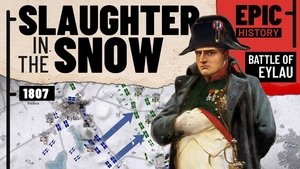
8. Napoleonic Wars: Battle of Eylau 1807
⏱ 24 minIn 1807, Napoleon Bonaparte hoped to follow up his brilliant victories over Austria and Prussia with another decisive victory over the Russians in Poland. But amid freezing winter conditions, his attempted encirclement of General Bennigsen's Russian army near the East Prussian town of Eylau led, instead, to one of the most notorious battles of the Napoleonic Wars, fought in terrible conditions, with appalling losses on both sides.
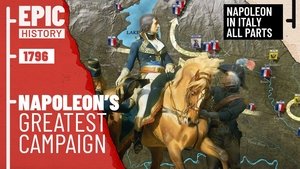
9. Napoleon's Italian Campaign (All Parts)
⏱ 122 minIn 1796, at the height of the Revolutionary Wars, Napoleon Bonaparte took command of French forces in northern Italy. He was just 26 years old and had never commanded an army before. Within weeks, he had turned his ragged, demoralised troops into a ferocious fighting force, defeating the Austrians and knocking Piedmont out of the war. With success, Napoleon began to believe it was his destiny to shape the fate of nations. In this series, we follow Napoleon's first glorious campaign step by step.
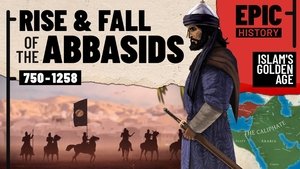
10. The Abbasids: Islam's Golden Age (All Parts)
⏱ 47 minIn the 8th century Middle East, a new dynasty seized control of one of the world’s greatest empires – the Islamic Caliphate. Though little remembered in the west today, the Abbasids reigned for five centuries. They oversaw an era of Islamic military dominance... city-building… brilliant scholarship, and technological innovation. It has come to be remembered as Islam’s ‘golden age’. This is the rise and fall of the Abbasid Caliphate.

11. 'Supreme Ruler of Russia': Rise of Admiral Kolchak
⏱ 31 minNovember 1918. In western Europe, the four-year slaughter of World War One was drawing to an end.But across the former Russian Empire, a new conflict had broken out… a civil war that raged from central Europe to the Pacific, claiming an estimated nine million lives. Lenin, the Bolsheviks and their new Soviet Republic battled for survival against their many enemies – collectively known as the ‘Whites’. The Whites’ great hope: their newly-appointed ‘Supreme Ruler of Russia’, Admiral Alexander Kolchak. Kolchak was a war hero, a man of duty and discipline, who believed above all in service to ‘the motherland’. Millions looked to him to crush the Bolsheviks, avenge the murdered Tsar, and save Russia from chaos and collapse. This is the extraordinary tale of the life and death of Admiral Kolchak – Russia’s only ‘Supreme Ruler’.
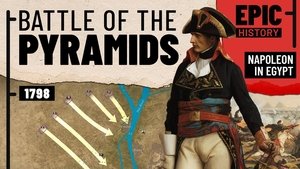
12. Napoleon in Egypt: Battle of the Pyramids 1798
⏱ 28 minIn 1798, during the French Revolutionary Wars, General Napoleon Bonaparte led a French expedition to Egypt. The plan was to conquer the wealthy province and deal a major blow to British interests in the Mediterranean. What followed was a campaign featuring legendary battles, ruthless occupation and immense hardship.
202416 episodes
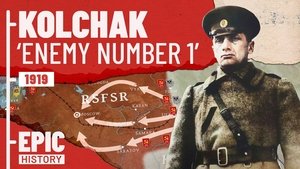
1. 'Enemy Number 1': Admiral Kolchak and the Russian Civil War
⏱ 32 minNovember 1918. In western Europe, the four-year slaughter of World War One was drawing to an end.But across the former Russian Empire, a new conflict had broken out… a civil war that raged from central Europe to the Pacific, claiming an estimated nine million lives. Lenin, the Bolsheviks and their new Soviet Republic battled for survival against their many enemies – collectively known as the ‘Whites’. The Whites’ great hope: their newly-appointed ‘Supreme Ruler of Russia’, Admiral Alexander Kolchak. Kolchak was a war hero, a man of duty and discipline, who believed above all in service to ‘the motherland’. Millions looked to him to crush the Bolsheviks, avenge the murdered Tsar, and save Russia from chaos and collapse. This is the extraordinary tale of the life and death of Admiral Kolchak – Russia’s only ‘Supreme Ruler’.
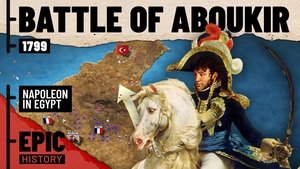
2. Napoleon in Egypt: Battle of Aboukir 1799
⏱ 30 minIn 1798, during the French Revolutionary Wars, General Napoleon Bonaparte sailed with a French army to Egypt. The plan was to conquer the wealthy Ottoman province and deal a major blow to British interests in the Mediterranean. What followed was a campaign featuring legendary battles, ruthless occupation and a brutal expedition into the Holy Land, marked by Napoleon's first major military setback, and some of his most controversial decisions.
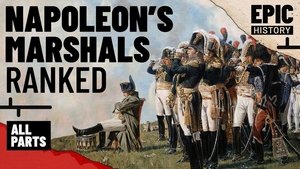
3. Napoleon's Marshals, Ranked (All Parts)
⏱ 181 minIn 1804 Napoleon created 18 'Marshals of the Empire', to serve as the senior officers of the Grande Armée. He created a further 8 before his abdication in 1814. A few were aristocrats, but others were the sons of shopkeepers or tailors. The most favoured became princes and kings. Among their ranks were legendary figures such as Marshals Lannes, Ney, Soult, Davout and Masséna, but also less well know figures like Pérignon, Brune and Moncey. Our series explores the lives of all 26 Marshals, and ranks them according to our own judgement of their achievements as Marshals.
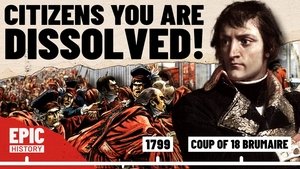
4. Napoleon Seizes Power - The Brumaire Coup
⏱ 31 minn 1799, the young French Republic faced war with a coalition of European enemies, and an unpopular and corrupt government at home. In the midst of disorder, military hero Napoleon Bonaparte returns from his campaign in Egypt. He has built a formidable reputation, he is adored by the people, and is viewed as an essential ally for those vying for power. But Napoleon has his own ambitions, and on one famous day in November, he will take decisive action to make them a reality. This is the full story of the Brumaire Coup - a day that changed the course of French history.

5. America's First Defeat: Northwest Frontier 1790
⏱ 26 minIn the years following independence, the newly-formed United States of America look westward for their expansion, hoping to conquer territory and sell off land to eager European settlers. Its first target is the vast, resource-rich 'Northwest Territory', stretching from the Appalachian Mountains to the Mississippi River. But this is not vacant land - thousands of native people from numerous tribes call these valleys and forests home, and will fight to protect it. As violence flares along the frontier and negotiations fail, President Washington and the US decide to take the territory by force... but they have fatally underestimated their enemy. This is the full story of the 'Northwest Indian War' and the Battle of the Wabash... America's first military defeat.
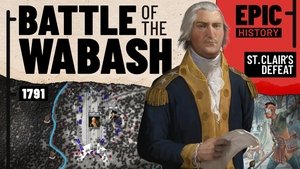
6. Stumbling to Disaster: Battle of the Wabash
⏱ 24 minIn the years following independence, the newly-formed United States of America look westward for their expansion, hoping to conquer territory and sell off the land to eager European settlers. Among their targets is the vast, resource-rich 'Northwest Territory', stretching from the Appalachian Mountains to the Mississippi River. But this is not vacant land - thousands of native people, across numerous tribes, call these valleys and forests their home, and they will fight to protect it. As violence along the frontier rises and negotiations fail, the federal government decides to take the territory by force... but they have fatally underestimated their enemy. This is the full story of the Battle of the Wabash... America's first military defeat.
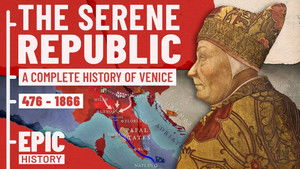
7. History of a Mediterranean Superpower: Rise & Fall of Venice
⏱ 39 minThe story of Venice is a fascinating tale of ambition, commerce, politics, wars and empires. Join us as we chart the extraordinary rise of Venice - from a community of refugees hiding out in the Italian lagoons, to one of the medieval world's most dominant maritime states - and then explore its gradual demise at the hands of powerful enemies. We'll discover how the Serene Republic took advantage of its unique coastal location, and used skilful diplomacy to outmanoeuvre its rivals and expand its empire across land and sea. Venice would go on to become a jewel of the Italian Renaissance, an architectural masterpiece, and what many still consider to be the most beautiful city in the world.
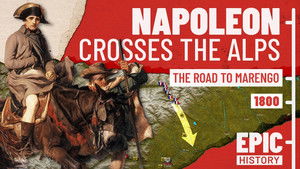
8. Napoleon Crosses the Alps: The Road to Marengo
⏱ 27 minIn 1800, France's new First Consul - Napoleon Bonaparte - faces a precarious military situation, with huge Austrian armies poised to strike against the French Republic. But Napoleon will not wither in the face of such a crisis. Instead, he embarks on one of the most famous and daring strategic manoeuvres in history - a march across the Alps - to turn the tables on France's enemies.
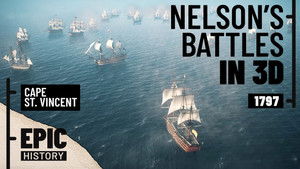
9. Nelson's Battles in 3D: Cape St. Vincent
⏱ 26 minAt the height of the French Revolutionary War, a new alliance between France and Spain threatened to overturn British naval supremacy, upon which Britain's empire, economy and security depended. The key to British survival would be to prevent the French and Spanish navies joining forces - so when British Admiral Jervis encountered the main Spanish battle fleet off Cape St.Vincent, he decided to attack, even though outnumbered almost two-to-one. The battle would be decided by the daring actions of one British commander - Commodore Horatio Nelson - who would soon emerge as one of history's most brilliant naval tacticans.
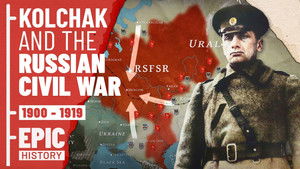
10. Kolchak & Russia's Civil War (All Parts)
⏱ 57 minNovember 1918. Following the Bolshevik Revolution, Russia is engulfed in a gigantic civil war. Lenin and the Reds hope to forge a new Soviet empire. His enemies, the Whites, look to their new leader Admiral Alexander Kolchak to avenge the murdered Tsar and save Russia from chaos. Kolchak is famed for his devotion to duty and 'the motherland', but faces a crisis of unimaginable proportions. Against the backdrop of a horrific civil war that claims millions of lives, he struggles for international support, military success, and ultimately, his own survival. This is our full documentary recounting the extraordinary life and times of Admiral Kolchak – Russia’s only ‘Supreme Ruler’.
11. Nelson's Battles in 3D: The Nile
⏱ 30 minIn 1798, after a series of French victories in Europe, Britain stands alone against France and her allies. Aiming to strike a major blow against British interests in the Mediterranean, Napoleon Bonaparte leads an expeditionary force to conquer Egypt. But Britain still has the most powerful navy in the world.. and they are in pursuit. What’s more, the British fleet in the Mediterranean is commanded by Rear Admiral Horatio Nelson, who has a reputation for bold leadership and aggression. When he catches up with the French fleet in Egypt, he will lead a daring attack that goes down in history.
12. Eyewitness Accounts from the Napoleonic Wars: Spain and Portugal 1808-1814
⏱ 32 minIn 1808, Napoleon launched a war against Spain, sparking a savage conflict that lasted nearly six years, cost half a million lives, and helped to bring down his empire. We tell the story of this war through more than a dozen dramatic accounts from Spanish, French, British, German and Polish participants. Together, they provide a raw and unflinching perspective of Napoleon's doomed attempt to conquer the Iberian peninsula. For the Spanish, it was their ‘War of Independence’ – for their British allies, ‘the Peninsular War’. These are the voices of witnesses to those momentous days.
13. Napoleon's Greatest Comeback: The Battle of Marengo
⏱ 27 minIn 1800, after marching across the Alps into Northern Italy and defeating every enemy in his path, Napoleon spreads his army in a bid to encircle the Austrians and block their escape. But he has miscalculated his enemy's intentions. On a hot summer's day, near the town of Marengo, an advancing detachment of French soldiers find themselves facing 30,000 Austrians. Outmanned and outgunned, the French are soon fighting for their lives, and Napoleon faces an overwhelming defeat. But when last minute reinforcements arrive, victory may still be in sight...
14. First Battles of the U.S. Army: Northwest Indian Wars - All Parts
⏱ 43 minIn the years following independence, the newly-formed United States of America look westward for their expansion, hoping to conquer territory and sell off land to eager European settlers. Its first target is the vast, resource-rich 'Northwest Territory', stretching from the Appalachian Mountains to the Mississippi River. But this is not vacant land - thousands of native people from numerous tribes call these valleys and forests home, and will fight to protect it. As violence flares along the frontier and negotiations fail, President Washington and the US decide to take the territory by force... but they have fatally underestimated their enemy. This is the full story of the 'Northwest Indian War' and the Battle of the Wabash... America's first military defeat.
15. Napoleon in Egypt (All Parts)
⏱ 55 minIn 1798, during the French Revolutionary Wars, General Napoleon Bonaparte led a daring French expedition to Egypt. The plan was to conquer the wealthy province, and deal a major blow to British interests in the Mediterranean. What followed was a campaign featuring legendary battles, ruthless occupation and immense hardship.
16. Napoleonic Wars 1804 - 1814 (All Parts)
⏱ 316 minThis is our full documentary covering the Napoleonic Wars - from Napoleon's glorious victories as France's new Emperor, to his disastrous invasions of Spain and Russia, and finally his dramatic downfall as he fights to save his empire. These were some of the bloodiest and most momentous conflicts Europe has ever seen, and now you can witness every major campaign and epic battle all in one video.
202521 episodes
1. Napoleon - Path to Power (All Parts)
⏱ 259 minFollow the epic saga of Napoleon's rise to power in one video: from his first success at Toulon as a young artillery captain, to his brilliant first campaigns in Italy, and his dramatic adventures across the sands of Egypt and Syria. In 1799 he seizes political power in the daring Brumaire Coup, before his legendary crossing of the Alps en route to the epic battlefield of Marengo.
2. Nelson's Battles in 3D: Trafalgar
⏱ 35 minIn 1805, Napoleon is planning his move against the Third Coalition of Britain, Russia and Austria. He is determined to finally defeat Britain, and if he can manage to get the French army across the English Channel, his huge and experienced land forces would surely capture the island. Only the formidable British navy stands in his way. Britain has ‘ruled the waves’ for many years, but now faces the combined forces of France and her ally, Spain. Nevertheless, when the British fleet catches sight of their enemy off Cape Trafalgar, its commander, Admiral Nelson, will not hesitate to engage. Admiral Nelson is outnumbered, but he has a typically daring plan of attack. The fierce battle that follows will be etched in time - a fateful day for Nelson, but also one that will seal his status as a titan of naval history.
3. American Revolution - Road to Rebellion
⏱ 27 minIn the late eighteenth century, Britain has consolidated its global empire and now dominates North America. But in defeating her colonial rivals, she has also amassed huge national debts. To alleviate Britain’s financial woes, Parliament levies new taxes on its American colonies. But they have gravely miscalculated the response to ‘taxation without representation’. While some in the colonies remain loyal to their ‘motherland’, a growing number of settlers decry the measures and protest violently. American ties to the British Crown are weakening, enterprising attitudes are flourishing, and as tensions rise, a growing independent spirit will carry these patriots to the brink of war.
4. Rise of China - Last of the Qing
⏱ 31 minChina is well known as one of the world’s largest and most powerful countries - a major player on the global stage, characterised by its distinctive culture and unyielding regime. Yet behind the China we see today lies a fascinating, complex and turbulent history - one that must be explored to truly understand the modern republic. We begin our series with the breakdown of a 250-year old imperial dynasty, revolutionary power struggles and a fleeting courtship with democracy. This is the rise of China.
5. American Revolution: Battles of Lexington & Concord
⏱ 28 minIn the wake of the Boston Tea Party, tensions between the American Colonies and British Government escalate rapidly. Desperate to reassert their authority, the British send troops to seize militia weapons in the town of Concord, Massachusetts. But the American rebels are ready for a fight. A violent showdown looms.
6. Rise of China - The Generalissimo
⏱ 30 minIn 1925, a decade on from the downfall of its last emperor, China remains deeply divided. Its people are at the mercy of warlords and rival political factions. But a charismatic and ambitious Nationalist leader, Chiang Kai-shek, has a plan to unite the country by force. What follows is a decade of violence and turmoil, as Chiang’s Kuomintang Army takes on the warlords, then forces the Communists into an epic retreat, before facing a reckoning with foreign aggressors.
7. The Battle of Valmy
⏱ 25 min1792. The Age of Revolution has arrived in Europe! In France, the old order has been overthrown and the principles of liberty and equality are inspiring the people. But France's neighbours are alarmed by the French Revolution and concerned that these radical ideals will spread. Conflict is inevitable, and by 1792 France is at war with the kingdoms of Austria and Prussia. When these coalition forces march into France that summer, they feel confident of defeating a French army has been thrown into disarray by the revolution, with new, inexperienced officers and untested citizen recruits. But when the two sides face off at Valmy, the French must make a stand - the fate of their revolution hangs in the balance.
8. Enigma: Breaking Germany's WW2 Codes
⏱ 25 minThis is the story of how Allied codebreakers took on the most sophisticated encryption machine ever devised, and beat it - changing the course of WW2. Part 1 explores the origins of the Enigma codebreaking mission, and the establishment of UK intelligence operations at Bletchley Park.
9. Rise of China - Battle for Survival
⏱ 34 minIn 1937, after years of internal conflict, China is briefly united by a devastating war with Japan, which reaches a horrific climax in the cities of Shanghai and Nanking. As its own ‘War of Resistance’ rolls on, China then becomes a key player in the Second World War, joining the allied fight against the Japanese Imperial Army across Asia. Victory is finally earned, but it comes at a staggering cost to the nation. In the power vacuum that follows, the old rival factions - Communists and Nationalists - will continue their fight for leadership. Just months after China emerges from the wreckage of one global conflict, it is once again plunged into a bitter civil war.
10. 250th Anniversary! American Revolution: Battle of Bunker Hill
⏱ 29 minAs negotiations between Britain and its American Colonies give way to open violence, the British garrison at Boston finds itself besieged by Patriot militias. At Charlestown, these Patriots will take a stand against the advancing Redcoats, in what becomes known as the Battle of Bunker Hill. Across the Colonies, British power is waining, just as American confidence is growing. Now both sides must step up their preparations for all-out war.
11. How did Christianity become the most popular religion on Earth?
⏱ 26 minToday, Christianity is the world's largest religion, but it was once the faith of just a few devoted followers. The story of its growth is one of the most astonishing in history. Our timeline and animated globe charts the spread of Christianity across the world, from the crucifixion of Christ to the present day, including all the major conversions, missions, conquests and schisms. Join us as we explore how a small, Judaic sect became the word's most popular religion over the course of 2,000 years.
12. How Did Islam Become a Global Religion?
⏱ 28 minThe rise of Islam is an astonishing tale of forgotten empires, mystics, medieval trade networks and bitter religious conflicts. Across 1400 years of history, discover how a new faith from the deserts of Arabia spread across the globe to Asia, Africa and Europe, and built a religion followed by 1.9 billion people today.
13. The Great Leap Forward
⏱ 32 minIn 1949, after decades of revolution, invasion and civil war, Mao Zedong finally takes control of China. Chairman Mao proclaims it a 'People's Republic', but democracy is not on the agenda. Instead, he wields absolute power in an authoritarian government determined to rebuild China in line with his communist ideals. In the years that follow, his regime will oversee the expansion of China's influence and its transformation into a major player on the international stage. But in his attempts to revolutionise Chinese society, Mao will also unleash catastrophic violence and sow the seeds of humanitarian disaster.
14. Ultra - WW2's Greatest Secret: Battle of the Atlantic
⏱ 27 minIn the darkest days of World War Two, the British Empire is the last major power fighting Nazi Germany. But German U-Boats scour the Atlantic and prey on Allied convoys bringing vital supplies to Britain. To stand any chance of fighting on, British codebreakers at Bletchley Park must crack the elusive Naval Enigma, and fast. Discover this remarkable true story of groundbreaking intelligence work, daring maritime raids and the genius of Alan Turing.
15. Rise of China - Cultural Revolution
⏱ 35 minIn the 1960s, China is back as a major world power - a nuclear-armed communist state, charting its own course. Chairman Mao makes his return to frontline politics, calling for permanent ‘Cultural Revolution’. The consequences for Chinese society will be far-reaching, transformative and traumatic. But Mao cannot live forever, and as his power fades in the following decade, those in his shadow fight for the right to lead China into the future.
16. Europe's Cataclysm: Thirty Years' War
⏱ 33 minIn 1618, Europe stands on the cusp of the most destructive war in its history - a thirty-year-long cataclysm that will engulf the continent. Slaughter and rumours of cannibalism will haunt the land. War, starvation, and plague will decimate whole populations. What started as a regional religious dispute spirals into a widespread, total war. No one will be spared in a conflict that still casts a long shadow across European history to this day.
17. American Revolution: Battle of Quebec
⏱ 31 minIn the winter of 1775, Patriot forces invade Canada in an audacious attempt to seize Quebec. Then, they pummel the British garrison in Boston. Victory electrifies and emboldens the Patriot cause, and in the summer of 1776, the Declaration of Independence signals a new dawn for the former American colonies. But Britain will not let this treachery stand. It assembles the largest expeditionary force in its history to crush the rebels, and when the British armada arrives off New York, the conflict is poised to escalate to new heights.
18. Road to WW2: 1931 - 34
⏱ 31 minIn the aftermath of World War One, the global order is once again in a state of flux. Young nations like Italy and Japan are searching for prestige through foreign conquests. Germany, which has been hit hardest by the Great Depression and the World War One peace treaty, now looks to Adolf Hitler to rebuild the nation. World War One’s victors are dealing with their own political and economic crises, and have no appetite for further conflict. But as they fail to stem the tide of nationalism, militarism and foreign aggression across the globe, war is beginning to feel inevitable.
19. Rise of China - The Economic Revolution that made China a Superpower
⏱ 37 minThe conclusion to our Rise of China series follows the nation’s transformation into the superpower we see today. In the wake of Mao Zedong’s death, Deng Xiaoping takes control and attempts to forge a new path for the People’s Republic. His reforms promise a brave new future, as China opens up to the world, transforms its economy and improves the living standards of its people. But China’s transformation will only be allowed to go so far. When popular protests erupt in 1989, the Tiananmen Square massacre becomes a startling reminder of China’s authoritarian government - one that survives to the present day.
20. Nelson's Battles in 3D: Copenhagen
⏱ 31 minIn 1801, Nelson sails to the Baltic under Admiral Sir Hyde Parker to break up the newly-formed ‘League of Armed Neutrality’. At Copenhagen, his objectives are simple: destroy the Danish fleet and threaten the city with bombardment. But as Nelson takes on the Danish navy under the guns of the enemy’s capital, the unfolding battle is far from straightforward. Formidable defences and heroic Danish sailors will push the British to the limit in a tense, explosive and bloody contest.
21. Road to WW2: 1935 - 36
⏱ 29 minIn 1935, the established powers are failing to stem a tide of militarism and extremism. Hitler wields unchecked power in Germany, using it to unravel the Versailles Treaty and enforce Nazi racial ideology. In China, Nationalist and Communist factions are under pressure to unite against the Japanese invasion before it’s too late. And in Africa, Mussolini looks to expand his new Italian empire through war in Ethiopia. Meanwhile, the economic stresses of the 1930s continue to drive political division across Europe. In 1936, the polarisation explodes into open violence in Spain, where a deadly Civil War breaks out. Facing these crises, will the global order unite, or will the world's most powerful nations continue on a path of self-interest and isolation?
20262 episodes
1. American Revolution: 1776 - Year of Crisis
⏱ 29 minIn the summer of 1776, the largest expeditionary army in British history arrives off New York to crush the American rebellion once and for all. Facing the full might of the British Empire, the Continental Army fights desperately to hold New York. But after a series of defeats, General Washington struggles to hold together his forces. Then, in the Revolution's darkest hour, he decides to risk everything to turn back the tide.
2. Road to WW2: 1937
⏱ 18 minIn 1937, conflicts across the globe wreak new levels of destruction and suffering. A civilian massacre in Ethiopia, the bombing of Guernica in Spain, and the ‘Rape of Nanking’ in China, provide glimpses of what could be endured in another world war. Reports and images from these conflicts are received with horror and increasing alarm, but Britain, France and the USA cling to their policy of ‘non-intervention’. As the alliances that will define the next great war take shape, the drift towards it seems inescapable.