Time and Tide (2020)
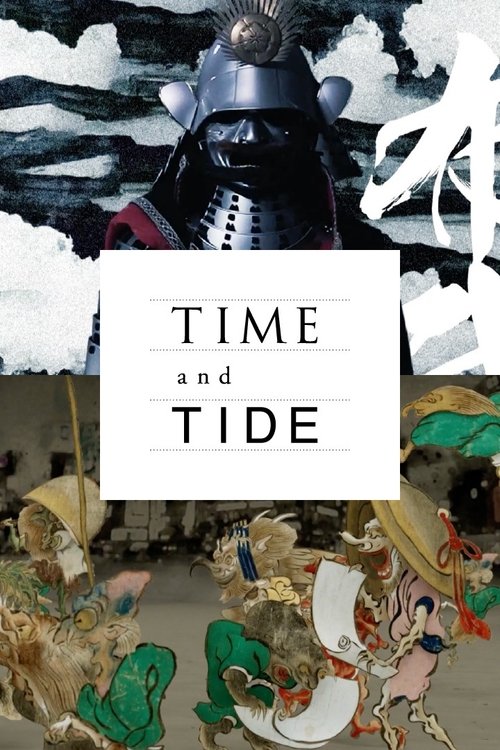
"Time and Tide" transcends time to detail extraordinary historical events in Japan and the larger world. Join NHK WORLD-JAPAN on a journey that reveals the truth behind some of the turning points of the past.
📺 Seasons & Episodes
Season 20202 episodes
1. Searching for the Standing Boy of Nagasaki
⏱ —A young boy carries on his back the lifeless body of his younger brother, in the devastated city of Nagasaki after the atomic bomb. An American military photographer, Joe O'Donnell, took a picture of him standing stoically near a cremation pit. No one knows the boy's name, but the photo has become an iconic image of the human tragedy of nuclear war. This program follows the continuing efforts to deepen understanding of the photograph, while exploring the fate of thousands of "atomic-bomb orphans" and their struggles to survive the aftermath of World War II.
2. UNTOLD STORIES OF THE BATTLE OF OKINAWA: Women and Teens on the Frontline
⏱ —No description available.
Season 20210 episodes
Season 202214 episodes
1. SAMURAI CASTLES: Tenshu - The Tower Keep
⏱ —No description available.
2. Another Story: The Crash of Japan Airlines Flight 123
⏱ —No description available.
3. Time Scoop Hunter: A "Sangaku" Battle of Wits
⏱ —No description available.
4. Ukraine: Echoes of History
⏱ —No description available.
5. Another Story: Asama-Sanso Incident - Ten Days of Suspense
⏱ —No description available.
6. History Uncovered: Osaka's Tragic Folding Screen
⏱ —No description available.
7. Nagasaki: 188 Memories of the Bomb
⏱ —No description available.
8. Women Painting War
⏱ —No description available.
9. MUSASHI TRUTH
⏱ —No description available.
10. SAMURAI WISDOM - ODA NOBUNAGA
⏱ —No description available.
11. YOKAI: Exploring Hidden Japanese Folklore – ZASHIKI WARASHI
⏱ —No description available.
12. Time Scoop Hunter: A Secret Mission - Release the Yabumi!
⏱ —No description available.
13. Another Story: The Abduction of Yokota Megumi - A Family's Struggle
⏱ —No description available.
14. Time Scoop Hunter: Edo's Substitute Farters
⏱ —No description available.
Season 202321 episodes
1. Time Scoop Hunter: The Timekeepers
⏱ —No description available.
2. Another Story: How Fist of the North Star Came to Be
⏱ —No description available.
3. Another Story: "SUKIYAKI" - Behind Japan's No. 1 US Hit
⏱ —No description available.
4. SAMURAI WISDOM: Takeda Shingen
⏱ —No description available.
5. YOKAI: Exploring Hidden Japanese Folklore – HIMEUO
⏱ —No description available.
6. SAKURA TRUTH
⏱ —No description available.
7. Time Scoop Hunter: A Boiling-hot Tocha Battle!
⏱ —No description available.
8. SAMURAI WISDOM: Tokugawa Ieyasu
⏱ —No description available.
9. SAMURAI CASTLES: Hikone Castle
⏱ —No description available.
10. History Uncovered: Muramasa - Cursed Blade
⏱ 28 minThe Japanese sword, a formidable weapon now appreciated as a work of fine artisanship. The samurai particularly valued Muramasa blades. Over 400 years ago, shogun Tokugawa Ieyasu himself wielded a Muramasa as he secured his leadership over a unified Japan. But his sword was also thought cursed. The Tokugawa shoguns passed the weapon down over the generations. But why? Japanese sword expert and former British Museum curator Paul Martin explores the mystery of this legendary cursed blade.
11. SAMURAI CASTLES: Matsumoto Castle
⏱ —No description available.
12. RIKYU TRUTH
⏱ —No description available.
13. The Floating World - First Contact
⏱ —No description available.
14. Time Scoop Hunter: Restoration, Love, and English
⏱ —No description available.
15. YOKAI: Exploring Hidden Japanese Folklore – TOMOKAZUKI
⏱ —No description available.
16. YOKAI: Exploring Hidden Japanese Folklore – KONAKIJIJI
⏱ —No description available.
17. YOKAI: Exploring Hidden Japanese Folklore – USHIONI
⏱ —No description available.
18. SAMURAI WISDOM—DATE MASAMUNE
⏱ —No description available.
19. History Uncovered: Tsukumo Nasu - Power in a Tea Caddy
⏱ —No description available.
20. MOUNT FUJI TRUTH
⏱ —No description available.
21. History Uncovered: Muramasa - Cursed Blade
⏱ 28 minThe Japanese sword, a formidable weapon now appreciated as a work of fine artisanship. The samurai particularly valued Muramasa blades. Over 400 years ago, shogun Tokugawa Ieyasu himself wielded a Muramasa as he secured his leadership over a unified Japan. But his sword was also thought cursed. The Tokugawa shoguns passed the weapon down over the generations. But why? Japanese sword expert and former British Museum curator Paul Martin explores the mystery of this legendary cursed blade.
Season 202421 episodes
1. History Uncovered: Chushingura - Tears of 47 Ronin
⏱ 28 minA long-beloved tale dating back some 300 years, Kanadehon Chushingura tells the story of the famed 47 ronin as they avenge the death of their lord, helping us uncover truths about Japanese character.
2. SAMURAI WISDOM: UESUGI KENSHIN
⏱ 28 minUesugi Kenshin: Japan's fiercest warrior fought not for glory, but to restore order. We learn from the wisdom of this supremely successful commander.
3. YOKAI: Exploring Hidden Japanese Folklore – HITOTSUMEKOZO
⏱ 28 minIn this episode, we take a look at the single-eyed Hitotsumekozo, which is feared in Kanagawa Prefecture as a Yokai that appears once a year to punish those who have committed bad deeds.
4. SAMURAI CASTLES: Matsuyama Castle
⏱ 28 minMatsuyama Castle with its main keep, which is a designated National Cultural Asset, turrets, stone walls and gates tells us much about strong defenses and the daily life of the lord and his vassals.
5. SAMURAI CASTLES: Osaka Castle
⏱ 28 minOsaka Castle is one of Japan's largest, covering over 100ha. The 30m stone walls and 90m moat are impressive. Why was such a huge castle needed? Learn about the powerful daimyo who moved history.
6. SAMURAI WISDOM: THE SANADA
⏱ 28 minSanada Yukimura remains a folk hero to this day. His clan used information and ingenuity to take on powerful foes, even the shogun Ieyasu himself.
7. SAMURAI CHONMAGE TRUTH
⏱ 28 minThe chonmage is the distinctive hairstyle of the samurai. Yet much about it remains unknown. Through interviews and experiments, we set out to discover the truth about when and how it came into being.
8. HOKUSAI TRUTH
⏱ 28 minJapan's iconic ukiyo-e artist Katsushika Hokusai left an indelible mark on the art world. We trace the development of "The Great Wave" and the location that inspired "Rainstorm beneath the Summit."

9. History Uncovered KIMONO DRESS - Japan's Clothing Revolution
⏱ 28 minIn the 19th century, Japan opened its doors. The "Kimono Dress"—emblematic of a broader clothing revolution—sheds light on Japan's forward-looking strategy as it joined the global community.
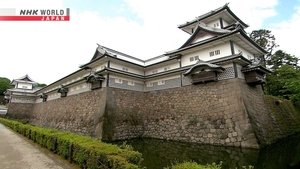
11. SAMURAI CASTLES: Kanazawa Castle
⏱ 28 minKanazawa Castle has an elegant design not seen in other castles. It has plastered geometric-patterned walls; white, metallic roof tiles; and a diversity of stone walls. Money was no object.
12. SAMURAI WISDOM: TOKUGAWA IEMITSU
⏱ 28 minSolidifying Tokugawa shogunate rule, "born shogun" Iemitsu, third of his line, paved the way for dramatic change via political reform and new ideas.
13. SAMURAI CASTLES: Himeji – The Defenses
⏱ 28 minHimeji Castle with its white keep is one of Japan's most famous castles. But its beauty is deceiving. The paths to the keep follow the hill's gradient and hold many surprises for potential attackers.
14. SAMURAI CASTLES: Himeji – The Keep
⏱ 28 minHimeji Castle, a UNESCO World Heritage Site, boasts the tallest, extant main keep in Japan. The elegant main keep and the sub-keeps are connected by corridors, forming a sturdy defense.
15. Time Scoop Hunter: The True Face of the Ninja
⏱ 28 minSawajima Yuichi travels to the Warring States period, when three ninja receive a top-secret order to steal an enemy castle's architectural plans. Will they be able to accomplish their mission?
16. SUSHI TRUTH
⏱ 28 minSushi is an iconic dish of Japan, with nigirizushi being the most popular style. We take a look at its evolution and the creation of key ingredients.
17. YOKAI: Exploring Hidden Japanese Folklore – NAMIKOZO
⏱ 28 minThis episode features the aquatic Namikozo, which warns locals in the area of the Enshu-nada Sea of coming changes in the weather by beating its drum to give waves a distinct, rumbling tone.
18. YOKAI: Exploring Hidden Japanese Folklore – UBUME
⏱ 28 minThe Yokai Ubume was said to be a ghostly woman appearing at night, asking passersby to hold her child under threat of death. We examine how this terrifying figure came to be seen as a sympathetic one.
19. YOKAI: Exploring Hidden Japanese Folklore – MUJINA
⏱ 28 minIn this episode, we pursue the shape-shifting trickster Mujina. This being associated with raccoon dogs is known on Niigata Prefecture's Sado Island as both human and animal, yokai and deity.
20. Time Scoop Hunter: Matchmaking in Edo Period
⏱ 28 minSawajima Yuichi investigates matchmaking in the Edo period. Matchmaker Oume is known for her skill in finding successful matches. Discover what it was like finding a partner in old Tokyo.
21. SAMURAI WISDOM—ASHIKAGA YOSHIMITSU—
⏱ 28 minClad in shining gold, Kinkakuji stands out even in Kyoto Prefecture. What inspired the samurai who built this stunning temple?
22. History Uncovered: The Armor of Japan - Beauty in Defense
⏱ 28 minIconic Japanese armor, worn for defense. 16th-century helmets featured outlandish shapes like a giant crescent moon or the ears of a rabbit. Behind its creation, we uncover the spirit of the samurai.
Season 202517 episodes
1. History Uncovered: The Secrets of Kyoto - Thousand-Year Capital
⏱ 28 minJapan's capital moved some 20 times before settling in Kyoto for over 1,000 years. Religion, natural disaster and power struggle compel an emperor's agonizing decision. Kyoto's origins, uncovered!
2. SAMURAI CASTLES: Odawara
⏱ 28 minOdawara Castle was built to protect the capital of the Edo shogunate. But its history stretches even further back. Learn the fateful story of Odawara Castle from the remains of stone walls and a moat.
3. SAMURAI WISDOM—DOG SHOGUN TOKUGAWA TSUNAYOSHI—
⏱ 28 minPainted as a foolish ruler in works of fiction, fifth Tokugawa shogun, Tsunayoshi. But is this depiction justified? Even he has wisdom to share.
4. YOKAI: Exploring Hidden Japanese Folklore – KITSUNE
⏱ 28 minThe fox, or KITSUNE also holds an identity as a supernatural creature commonly depicted at shrines, known for its ability to masquerade as humans to deceive them, or to provide divine messages.
5. SAMURAI CASTLES: Shogun Special
⏱ 49 minThe title role in the TV series "Shogun," based on James Clavell's eponymous novel, was modeled on Tokugawa Ieyasu. We reveal his secret strategy for building Edo, Nagoya, Osaka and Nijo-jo Castles.
6. History Uncovered: A Message in Clay
⏱ 28 minFrom the 3rd to the early 7th century, Japan produced terracotta figures known as haniwa in many forms. These mysterious objects hold the key to Japan's birth as a unified nation.
7. SAMURAI WISDOM—TOKUGAWA YOSHIMUNE—
⏱ 28 minYoshimune, the shogun who saved the city of Edo. Through disaster and economic strife, alongside its people, his wisdom shaped the future of the place now called Tokyo.
8. SAMURAI WISDOM—MAEDA TOSHIIE—
⏱ 28 minWith flashy armor and cunning tactics, samurai Maeda Toshiie struck fear in the heart of Shogun Tokugawa Ieyasu and left a lasting cultural influence.
9. SAMURAI CASTLES: Aizuwakamatsu
⏱ 28 minThis castle, 200 km north of Tokyo, was a battleground in Japan's last civil war in the mid-19th C. Modern warfare did not bring it down. We look at the secrets to the its strengths and its lords.
10. SAMURAI CASTLES: Okayama
⏱ 28 minOkayama Castle is unique and puzzles visitors. The keep shows a different face, depending on the direction, and each floor is a different shape. We look at how this mysterious castle was built.
11. History Uncovered: The Hiroshige Code
⏱ 28 minInfluential ukiyo-e artist Utagawa Hiroshige's "100 Famous Views of Edo", a series of prints encoding his view of the changing face of Japan.
12. SAMURAI WISDOM KURODA KANBEI
⏱ 28 minWhether outnumbered or laying siege to a seemingly impenetrable fortress, master strategist Kuroda Kanbei used his wits to win on the battlefield.
13. YOKAI: Exploring Hidden Japanese Folklore - KIJIMUNA
⏱ 28 minKIJIMUNA of Okinawa, a red-haired child spirit in banyan trees, brings fortune to fishermen but punishes betrayal, embodying nature in local life.
14. YOKAI: Exploring Hidden Japanese Folklore - YAROKAMIZU
⏱ 28 minIn this episode, we search for the Yarokamizu, told of in the Kiso River region of Aichi as a yokai that raises awareness of environmental disasters, and also recognized as a local deity.
15. JAPANESE FIREWORKS TRUTH
⏱ 28 minJapanese fireworks have long enchanted people with their spherical shape and range of colors. We trace the rise of fireworks in Japan and also examine the 400-year-old mystery of the senko hanabi.
16. SAKE TRUTH
⏱ 28 minSake is gaining attention worldwide for its rich and complex flavors. We explore various aspects of Japan's national drink, from the koji that determines the flavor to medieval innovations that laid the foundation for sake-making today. We also shine a light on heated sake, or kanzake, and examine the science behind how heat affects its flavor profile.
17. History Uncovered Wings of the Tokugawa
⏱ 28 minStarting with Ieyasu, the Tokugawa Shoguns made clever use of falconry beyond mere hunting. Uncover their deep connection with these majestic birds.